



Close Menu
باب مصرباب مصر

    Subscribe to Updates

    Get the latest creative news from FooBar about art, design and business.

    What's Hot

    The Woven Skeleton: The Palm Frond Artisans of Kafr Al-Battikh Fend Off a Plastic Tide

    2026-05-14

    The Sanctuary of Saint Bishoy: A Living Ledger of Egyptian Monasticism

    2026-05-13

    Shadows Over the Nile: Concrete Construction Spark Criticism Beneath the Temple of Kalabsha

    2026-05-13
    Facebook X (Twitter) Instagram
    Facebook X (Twitter) Instagram YouTube LinkedIn
    باب مصرباب مصر
    Contact US
    باب مصرباب مصر
    Home»Upper Egypt» Where Sand Becomes Art: Inside Egypt’s One-of-a-Kind Museum on the Red Sea
    Upper Egypt

     Where Sand Becomes Art: Inside Egypt’s One-of-a-Kind Museum on the Red Sea

    Esraa MoharebBy Esraa Mohareb2026-03-26Updated:2026-05-20No Comments4 Mins Read0 Views
    Facebook Twitter Pinterest LinkedIn Tumblr Email
    Share
    Facebook Twitter LinkedIn Pinterest WhatsApp Email

    In Hurghada, an extraordinary museum is carved entirely from sand. Home to 59 sculptures ranging from pharaohs to superheroes, it ranks as one of only three sand museums in the world. Here’s how it’s made and why visitors keep coming back.

    The Sand Museum on Egypt’s Red Sea coast is one of the most distinctive tourist attractions in Hurghada. It draws visitors for its unique artistic character, blending creativity with rarity. Though this art form is relatively new, it has established itself as a highlight in the itineraries of tour companies. The museum is globally significant: it ranks as the third sand museum in the world, joining only two others in Japan and the United States.

    What the Museum Holds

    Ali Mustafa Ali, a visual artist and antiquities restorer at the museum, explained to “Bab Misr” the museum’s artistic focus. “The Sand Museum is built on two main types of art,” he said. “The first is mythological art, and the second is the wonders of the earth.”

    Mythological art draws from Greek mythology, stories of ancient gods, and historical legends. The “wonders of the earth” section features sculpted representations of the Seven Wonders of the World.

    The museum contains 59 sculptures, including 19 three-dimensional works. The collection includes models of the pyramids and the Sphinx, statues of Greek and Roman gods, and other distinctive pieces. Among the featured sculptures are Napoleon Bonaparte, Queen Isis, Cleopatra, Alexander the Great, and Sultan Mehmed the Conqueror.

    Sections of the Museum

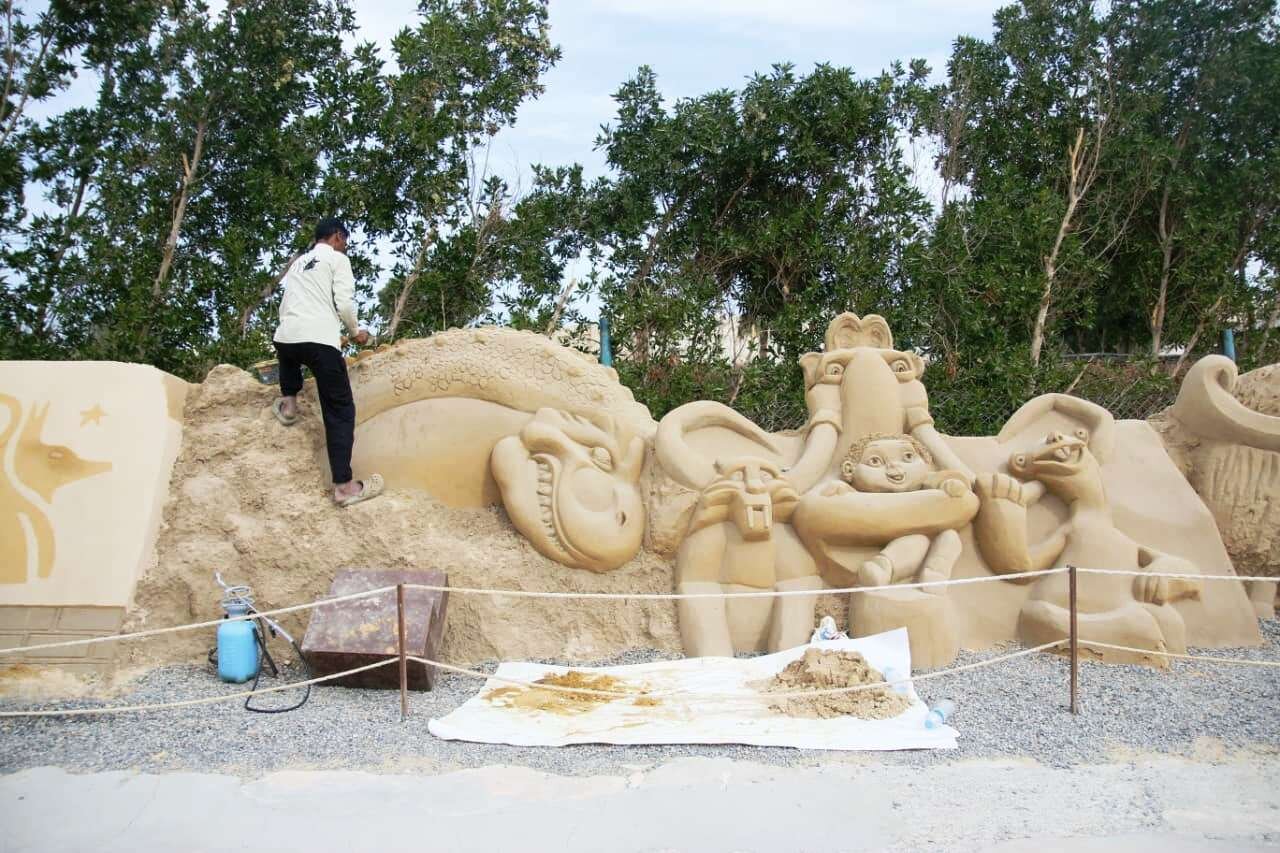
    Ali continued that the museum has a dedicated area for children featuring a large collection of cartoon characters and Hollywood figures beloved by modern youth. These include Batman, Spider-Man, Bakkar, Tom and Jerry, Jack Sparrow, Peter Pan, Bugs Bunny, Iron Man, Superman, Transformers, King Kong, and other famous characters.
    Sand Museum 2
    Sand Museum sculptures

    How the Sculptures Are Made

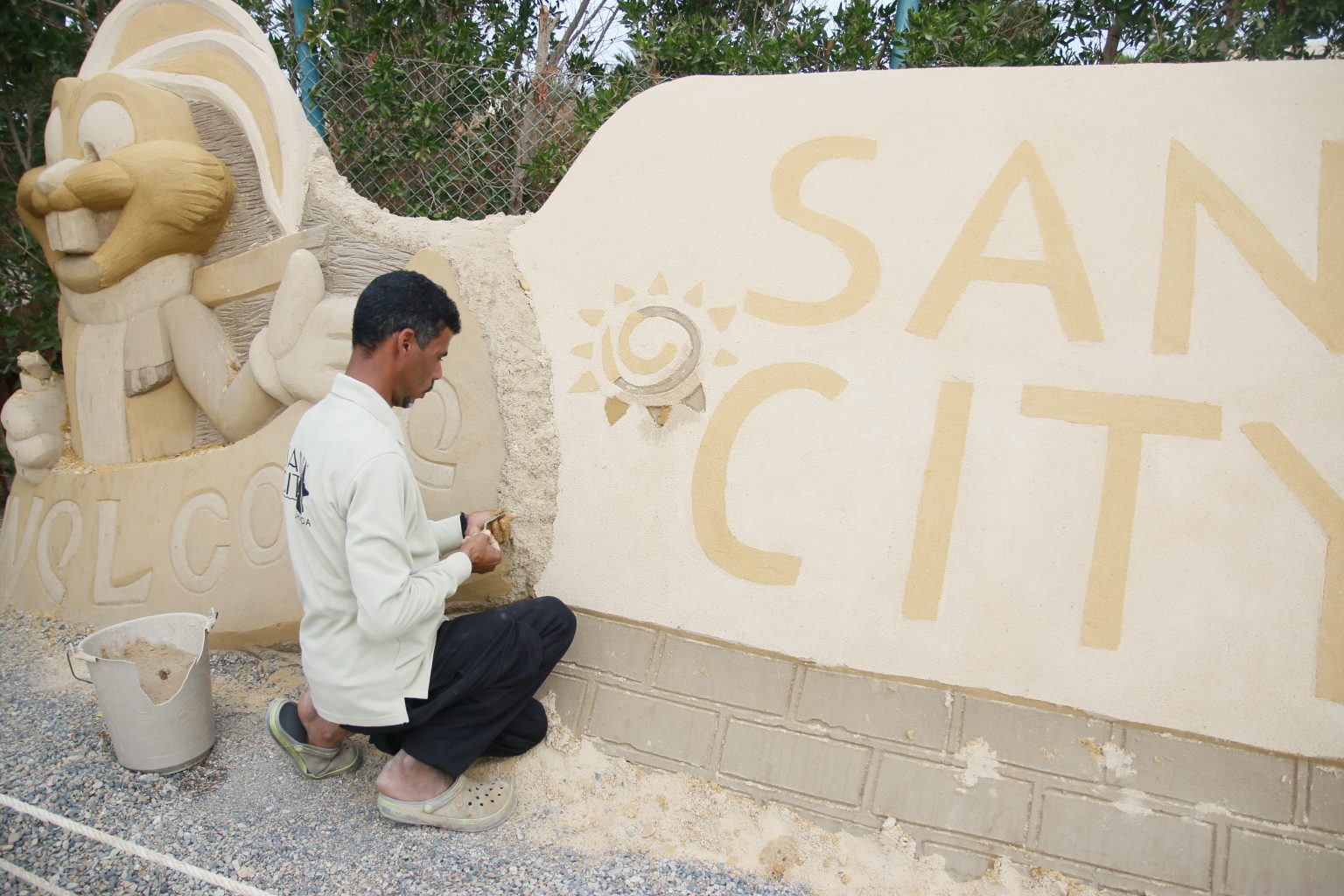
    Regarding the technique of sculpture making, Ali explained that two types of sand are used: white and yellow. A wooden frame is built for each sculpture. The sand is mixed with water and compacted using a special technique involving periodic watering until it forms a cohesive, workable block. The sculpture is then shaped according to the intended design.

    Abdelgaber Mustafa, one of the museum’s artists, explained that creating the museum’s sculptures took seven months. More than 25 artists from around the world participated, using 13,000 cubic meters of sand and 5,000 liters of water. A single sculpture can take up to three weeks, depending on the number of artists working on it. Each piece is then sprayed with a “glue” solution, a mixture of adhesive and water, to facilitate the sculpting process.

    Maintenance and Restoration

    Abdelgaber added that the sculptures undergo continuous restoration and maintenance because they are quickly affected by weather conditions. The outer layer is removed and a new one added to bring out the color gradations in the sculptures’ designs. The museum relies on five permanent resident artists to carry out maintenance and restoration work.

    Mohamed Qassem, another artist at the museum, joined the conversation, confirming that special preparations are made to cover the sculptures in case of rain. Weather forecasts are closely monitored to protect the artworks and prevent any damage.
    sand3
    Sand Museum sculptures

    Services for Visitors

    Mohamed Qassem continued, explaining that the museum is open daily from 9:00 AM to midnight. It organises evening gatherings and barbecues inside the Arabian tent, which offers cheese, coffee, and traditional Arabic tea. The museum also hosts performances by tanoura dancers and folk troupes from the Nile Delta and Upper Egypt. These events help attract visitors, especially since the tent is designed in an authentic Arabian style with floor seating that gives visitors a sense of comfort and evokes the atmosphere of the desert and Bedouin life.

    Banoub Ghaly, an antiquities restorer, explained that the museum opened in 2014 on a site covering 10,280 cubic meters. It receives visitors from around the world. Ticket prices are 200 Egyptian pounds for Egyptians and $10 for foreigners. The museum offers several services, including fast food, mandi rice and meat dishes, and evening barbecues, as well as several bazaars within the museum.

    Ghaly noted that the museum can accommodate groups waiting for their flights after checking out of their hotels. It also features a theatre for performances and folk plays, and hosts celebrations for the various expatriate communities in Hurghada. An annual event is held regularly for people with special needs in the Red Sea on December 4th, organised by the museum’s management. The museum also offers art workshops for children and hosts school groups from across the governorate.

    Hurghada museums Red Sea tourist attractions Sand Museum Hurghada sand sculpture art Egypt
    Share. Facebook Twitter Pinterest LinkedIn Tumblr Email
    Previous ArticleThe King Who Existed Only in Legend: A Discarded Letter Rewrites Sudan’s History
    Next Article Can Theater Survive in Upper Egypt? Asyut’s Stage Is Alive, But Barely
    Esraa Mohareb

    Related Posts

    The Sanctuary of Saint Bishoy: A Living Ledger of Egyptian Monasticism

    2026-05-13

    Shadows Over the Nile: Concrete Construction Spark Criticism Beneath the Temple of Kalabsha

    2026-05-13

    The Last Cobblers of Luxor: A Craft Contesting the Modern Tide

    2026-05-10

    Comments are closed.

    Recent Posts
    • The Woven Skeleton: The Palm Frond Artisans of Kafr Al-Battikh Fend Off a Plastic Tide
    • The Sanctuary of Saint Bishoy: A Living Ledger of Egyptian Monasticism
    • Shadows Over the Nile: Concrete Construction Spark Criticism Beneath the Temple of Kalabsha
    • The Damanhur Opera House: A Sovereign Union of Italian Elegance and Islamic Heritage
    • The Silent Outposts of Port Said: Ruins Beyond the Reach of Visitors
    Recent Comments
    • Binance美国注册 on An exhibition in Paris reimagines Cleopatra, far from Western narratives
    • binance "oppna konto on An exhibition in Paris reimagines Cleopatra, far from Western narratives
    • código de referencia de Binance on Art exhibition documents the first Egyptian Scout postage stamp at the National Museum of Civilization
    • Binance账户创建 on Between popular religiosity and the benevolence of the Quran, how can beauty be reconnected with “Sayyida Zeinab”?
    • phoenix game on Theater never dies… Mansoura saves its heritage and restores it as an opera house
    About Us
    About Us

    Your source for the lifestyle news. This demo is crafted specifically to exhibit the use of the theme as a lifestyle site. Visit our main page for more demos.

    We're accepting new partnerships right now.

    Email Us: info@example.com
    Contact: +1-320-0123-451

    Facebook X (Twitter) Pinterest YouTube WhatsApp
    Our Picks

    The Woven Skeleton: The Palm Frond Artisans of Kafr Al-Battikh Fend Off a Plastic Tide

    2026-05-14

    The Sanctuary of Saint Bishoy: A Living Ledger of Egyptian Monasticism

    2026-05-13

    Shadows Over the Nile: Concrete Construction Spark Criticism Beneath the Temple of Kalabsha

    2026-05-13
    Most Popular

    Shadows Over the Nile: Concrete Construction Spark Criticism Beneath the Temple of Kalabsha

    2026-05-135 Views

    The Sanctuary of Saint Bishoy: A Living Ledger of Egyptian Monasticism

    2026-05-132 Views

    The Healing Arteries of Dakhla: Harnessing the Geothermal Riches of the New Valley

    2026-05-062 Views
    Demo
    Latest Posts

    The Woven Skeleton: The Palm Frond Artisans of Kafr Al-Battikh Fend Off a Plastic Tide

    2026-05-140 Views

    The Sanctuary of Saint Bishoy: A Living Ledger of Egyptian Monasticism

    2026-05-132 Views

    Shadows Over the Nile: Concrete Construction Spark Criticism Beneath the Temple of Kalabsha

    2026-05-135 Views

    The Damanhur Opera House: A Sovereign Union of Italian Elegance and Islamic Heritage

    2026-05-111 Views
    Stay In Touch
    • Facebook
    • Twitter
    • Pinterest
    • Instagram
    • YouTube
    • Vimeo
    Don't Miss

    Shadows Over the Nile: Concrete Construction Spark Criticism Beneath the Temple of Kalabsha

    By Bab Masr2026-05-13

    A controversy erupts in Aswan as new concrete structures at the Temple of Kalabsha spark…

    The Sanctuary of Saint Bishoy: A Living Ledger of Egyptian Monasticism

    2026-05-13

    The Healing Arteries of Dakhla: Harnessing the Geothermal Riches of the New Valley

    2026-05-06

    Subscribe to Updates

    Get the latest creative news from SmartMag about art & design.

    Demo
    Demo
    Latest Posts

    The Woven Skeleton: The Palm Frond Artisans of Kafr Al-Battikh Fend Off a Plastic Tide

    2026-05-140 Views

    The Sanctuary of Saint Bishoy: A Living Ledger of Egyptian Monasticism

    2026-05-132 Views

    Shadows Over the Nile: Concrete Construction Spark Criticism Beneath the Temple of Kalabsha

    2026-05-135 Views

    The Damanhur Opera House: A Sovereign Union of Italian Elegance and Islamic Heritage

    2026-05-111 Views
    Stay In Touch
    • Facebook
    • Twitter
    • Pinterest
    • Instagram
    • YouTube
    • Vimeo
    Don't Miss

    Shadows Over the Nile: Concrete Construction Spark Criticism Beneath the Temple of Kalabsha

    By Bab Masr2026-05-13

    A controversy erupts in Aswan as new concrete structures at the Temple of Kalabsha spark…

    The Sanctuary of Saint Bishoy: A Living Ledger of Egyptian Monasticism

    2026-05-13

    The Healing Arteries of Dakhla: Harnessing the Geothermal Riches of the New Valley

    2026-05-06

    Subscribe to Updates

    Get the latest creative news from SmartMag about art & design.

    Demo
    About Us
    About Us

    Your source for the lifestyle news. This demo is crafted specifically to exhibit the use of the theme as a lifestyle site. Visit our main page for more demos.

    We're accepting new partnerships right now.

    Email Us: info@example.com
    Contact: +1-320-0123-451

    Facebook X (Twitter) Pinterest YouTube WhatsApp
    Our Picks

    The Woven Skeleton: The Palm Frond Artisans of Kafr Al-Battikh Fend Off a Plastic Tide

    2026-05-14

    The Sanctuary of Saint Bishoy: A Living Ledger of Egyptian Monasticism

    2026-05-13

    Shadows Over the Nile: Concrete Construction Spark Criticism Beneath the Temple of Kalabsha

    2026-05-13
    Most Popular

    Shadows Over the Nile: Concrete Construction Spark Criticism Beneath the Temple of Kalabsha

    2026-05-135 Views

    The Sanctuary of Saint Bishoy: A Living Ledger of Egyptian Monasticism

    2026-05-132 Views

    The Healing Arteries of Dakhla: Harnessing the Geothermal Riches of the New Valley

    2026-05-062 Views
    © 2026 ThemeSphere. Designed by ThemeSphere.

    Type above and press Enter to search. Press Esc to cancel.