



Close Menu
باب مصرباب مصر

    Subscribe to Updates

    Get the latest creative news from FooBar about art, design and business.

    What's Hot

    The Woven Skeleton: The Palm Frond Artisans of Kafr Al-Battikh Fend Off a Plastic Tide

    2026-05-14

    The Sanctuary of Saint Bishoy: A Living Ledger of Egyptian Monasticism

    2026-05-13

    Shadows Over the Nile: Concrete Construction Spark Criticism Beneath the Temple of Kalabsha

    2026-05-13
    Facebook X (Twitter) Instagram
    Facebook X (Twitter) Instagram YouTube LinkedIn
    باب مصرباب مصر
    Contact US
    باب مصرباب مصر
    Home»Upper Egypt»Shadows Over the Nile: Concrete Construction Spark Criticism Beneath the Temple of Kalabsha
    Upper Egypt

    Shadows Over the Nile: Concrete Construction Spark Criticism Beneath the Temple of Kalabsha

    Bab MasrBy Bab Masr2026-05-13Updated:2026-05-20No Comments5 Mins Read5 Views
    Facebook Twitter Pinterest LinkedIn Tumblr Email
    Share
    Facebook Twitter LinkedIn Pinterest WhatsApp Email

    A controversy erupts in Aswan as new concrete structures at the Temple of Kalabsha spark outcry over visual heritage. Experts and officials clash over whether these modern security additions preserve site functionality or desecrate the hallowed aesthetic of Egypt’s historic Nubian panorama.

    By Wafaa Amin

    Amidst a swelling tide of controversy among archaeologists and heritage guardians, newly erected concrete structures at the base of the Temple of Kalabsha in Aswan have ignited a firestorm of criticism. Following the circulation of images across social media platforms, critics have decried the additions as “visual pollution” marring one of Egypt’s most significant Nubian sanctuaries. Conversely, an antiquities official maintained that these installations are purely functional and do not compromise the site’s aesthetic integrity.

    An Affront to Identity

    Tamer Marzouk, an architectural restorer, argues that the developments at Kalabsha cannot be characterized as “improvement” by any measure. Instead, he views them as a blunt distortion of one of the nation’s most storied archaeological vistas. Marzouk asserted that the presence of modern structures directly before the temple facade represents a scrubbing of visual identity and a desecration of the historical panorama that has defined the monument for millennia. Antiquities, he added, are not merely weathered stones; they are the anchors of history, identity, and Egypt’s global image.

    Marzouk further explained that the geographical essence of Kalabsha is inextricably linked to the river. Visitors approaching from the High Dam ports experience the temple’s majesty across an expansive horizon as they traverse the lake. The rise of these concrete blocks, he argues, “severs the visual connection to the archaeological landscape.” He noted that dozens of alternatives exist for administrative or service facilities that would not impede the temple’s frontage or the site’s general atmosphere, calling for the immediate removal of the structures and accountability for those who sanctioned them.
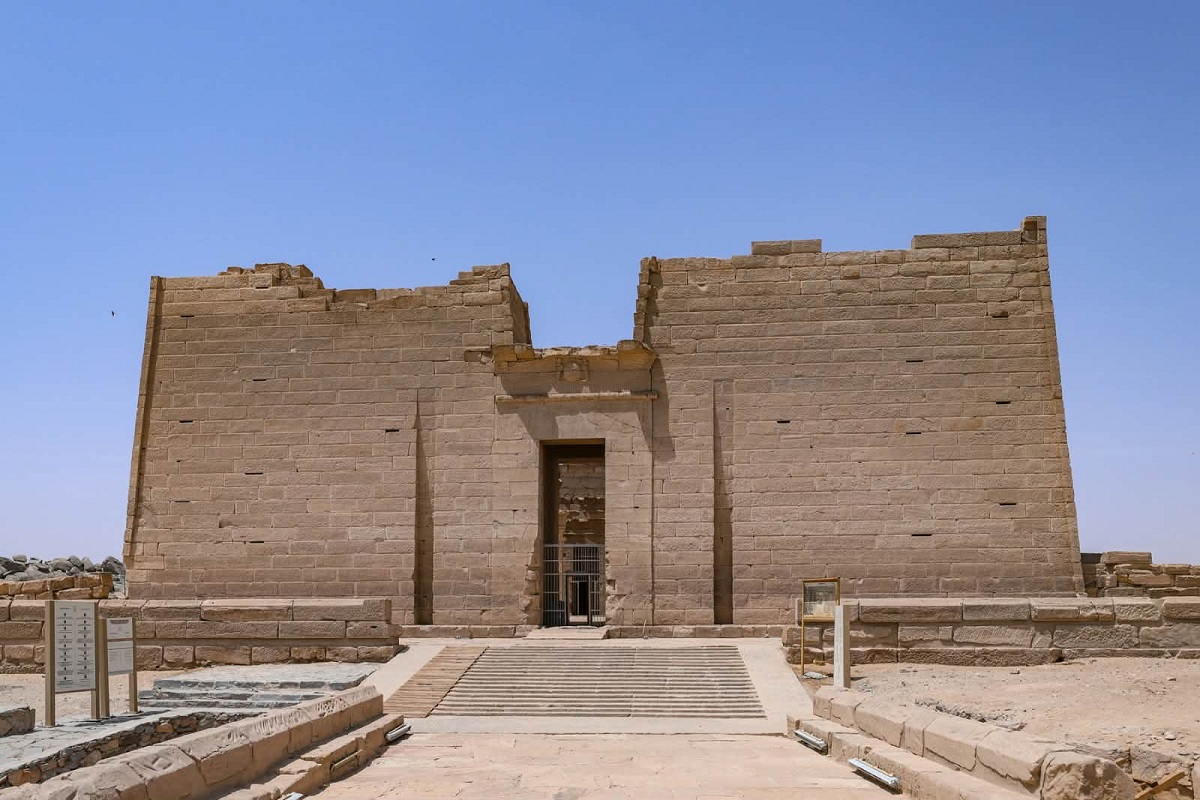
    ac6e768e 1a9b 4293 9d6c 1405c4803cd6
    The Temple of Kalabsha in Aswan – Photo: Ahmed Mostafa

    Fortified for Security

    In contrast, an official at the Ministry of Tourism and Antiquities, speaking on the condition of anonymity, denied any visual degradation of the site. He clarified that the concrete rooms are dedicated to security and ticketing operations and bear no relation to the restoration of the temple itself. The official explained that the roofs of these rooms sit approximately 60 centimeters below the temple’s ground level. Their location was meticulously selected by a team of engineers, designers, and archaeologists to ensure they remain unaffected by the fluctuating water levels of Lake Nasser.

    He insisted that these structures do not obstruct the view for tourists arriving via the Nile, suggesting that certain viral images were captured at specific angles to create the illusion that they sit directly in the temple’s foreground. Furthermore, he noted that Kalabsha undergoes rigorous, ongoing maintenance, particularly to combat bird droppings, which he described as the most pressing threat to the monument’s current state. To address this, mesh wiring is being installed at entry points to deter birds, thereby streamlining cleaning efforts and preserving the site’s pristine condition.

    The official reassured the public that the structural integrity of the temple remains excellent and undamaged. Current restoration efforts are limited to mechanical cleaning and the periodic removal of avian waste, with ministry teams providing constant oversight to ensure the temple remains in its best form.
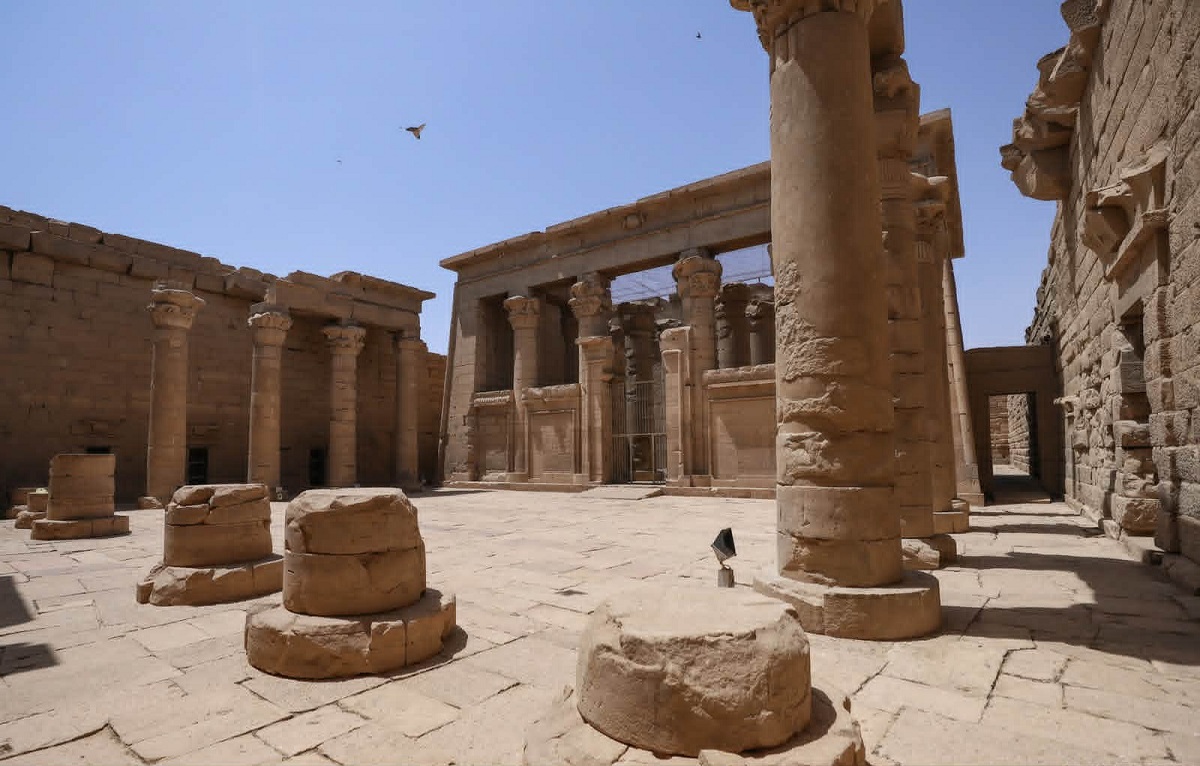
    26b84b96 c3df 46d2 8a59 984dd45d1163
    From within the Temple of Kalabsha in Aswan – Photo: Ahmed Mostafa

    A Jewel of the Nubian Rescue

    The source further noted that the Temple of Kalabsha, situated south of Aswan near Lake Nasser, stands as a preeminent monument of the Nubian rescue mission. Following the construction of the High Dam, the temple was dismantled and relocated stone by stone during the international UNESCO campaign of the 1960s, an epic endeavor to save Nubia’s treasures from a watery grave.

    Regarded as the largest Nubian temple after Abu Simbel, Kalabsha reached its zenith during the Roman era, constructed atop vestiges from the Ptolemaic period. It was dedicated to the worship of the Nubian-Egyptian deity Mandulis. The surrounding precinct also houses the temples of Beit al-Wali and Gerf Hussein, along with the Kiosk of Qertassi (a sacred pavilion), together forming a singular tapestry of Egyptian, Nubian, and Roman civilizations.

    Encroachment on the Sacred

    Dr. Abeer Mahmoud Tantawy, a prominent tour guide, has appealed to Ministry of Tourism and Antiquities officials to halt all construction within tourist zones, characterizing such work as an encroachment on the temple’s hallowed sanctuary (haram al-ma’bad). She observed that these buildings have irrevocably cluttered the facade of Kalabsha. Upon reaching the temple’s pier, a visitor should be greeted by the unadulterated grandeur and interiority of the site. She recalled that since the initial salvation of the Nubian temples, clever, discreet solutions were employed for essential facilities like restrooms, ensuring they remained hidden from the visual narrative.

    Given the site’s strategic and secure location directly behind the High Dam, Dr. Tantawy emphasized that if such administrative buildings are an absolute necessity, they must be tucked away in lateral, obscured locations, far from the temple’s commanding face.

    Archaeology architecture Aswan conservation monuments nubia restoration tourism
    Share. Facebook Twitter Pinterest LinkedIn Tumblr Email
    Previous ArticleThe Damanhur Opera House: A Sovereign Union of Italian Elegance and Islamic Heritage
    Next Article The Sanctuary of Saint Bishoy: A Living Ledger of Egyptian Monasticism
    Bab Masr

    Related Posts

    The Sanctuary of Saint Bishoy: A Living Ledger of Egyptian Monasticism

    2026-05-13

    The Damanhur Opera House: A Sovereign Union of Italian Elegance and Islamic Heritage

    2026-05-11

    The Last Cobblers of Luxor: A Craft Contesting the Modern Tide

    2026-05-10

    Comments are closed.

    Recent Posts
    • The Woven Skeleton: The Palm Frond Artisans of Kafr Al-Battikh Fend Off a Plastic Tide
    • The Sanctuary of Saint Bishoy: A Living Ledger of Egyptian Monasticism
    • Shadows Over the Nile: Concrete Construction Spark Criticism Beneath the Temple of Kalabsha
    • The Damanhur Opera House: A Sovereign Union of Italian Elegance and Islamic Heritage
    • The Silent Outposts of Port Said: Ruins Beyond the Reach of Visitors
    Recent Comments
    • Binance美国注册 on An exhibition in Paris reimagines Cleopatra, far from Western narratives
    • binance "oppna konto on An exhibition in Paris reimagines Cleopatra, far from Western narratives
    • código de referencia de Binance on Art exhibition documents the first Egyptian Scout postage stamp at the National Museum of Civilization
    • Binance账户创建 on Between popular religiosity and the benevolence of the Quran, how can beauty be reconnected with “Sayyida Zeinab”?
    • phoenix game on Theater never dies… Mansoura saves its heritage and restores it as an opera house
    About Us
    About Us

    Your source for the lifestyle news. This demo is crafted specifically to exhibit the use of the theme as a lifestyle site. Visit our main page for more demos.

    We're accepting new partnerships right now.

    Email Us: info@example.com
    Contact: +1-320-0123-451

    Facebook X (Twitter) Pinterest YouTube WhatsApp
    Our Picks

    The Woven Skeleton: The Palm Frond Artisans of Kafr Al-Battikh Fend Off a Plastic Tide

    2026-05-14

    The Sanctuary of Saint Bishoy: A Living Ledger of Egyptian Monasticism

    2026-05-13

    Shadows Over the Nile: Concrete Construction Spark Criticism Beneath the Temple of Kalabsha

    2026-05-13
    Most Popular

    Shadows Over the Nile: Concrete Construction Spark Criticism Beneath the Temple of Kalabsha

    2026-05-135 Views

    The Sanctuary of Saint Bishoy: A Living Ledger of Egyptian Monasticism

    2026-05-132 Views

    The Healing Arteries of Dakhla: Harnessing the Geothermal Riches of the New Valley

    2026-05-062 Views
    Demo
    Latest Posts

    The Woven Skeleton: The Palm Frond Artisans of Kafr Al-Battikh Fend Off a Plastic Tide

    2026-05-140 Views

    The Sanctuary of Saint Bishoy: A Living Ledger of Egyptian Monasticism

    2026-05-132 Views

    Shadows Over the Nile: Concrete Construction Spark Criticism Beneath the Temple of Kalabsha

    2026-05-135 Views

    The Damanhur Opera House: A Sovereign Union of Italian Elegance and Islamic Heritage

    2026-05-111 Views
    Stay In Touch
    • Facebook
    • Twitter
    • Pinterest
    • Instagram
    • YouTube
    • Vimeo
    Don't Miss

    Shadows Over the Nile: Concrete Construction Spark Criticism Beneath the Temple of Kalabsha

    By Bab Masr2026-05-13

    A controversy erupts in Aswan as new concrete structures at the Temple of Kalabsha spark…

    The Sanctuary of Saint Bishoy: A Living Ledger of Egyptian Monasticism

    2026-05-13

    The Healing Arteries of Dakhla: Harnessing the Geothermal Riches of the New Valley

    2026-05-06

    Subscribe to Updates

    Get the latest creative news from SmartMag about art & design.

    Demo
    Demo
    Latest Posts

    The Woven Skeleton: The Palm Frond Artisans of Kafr Al-Battikh Fend Off a Plastic Tide

    2026-05-140 Views

    The Sanctuary of Saint Bishoy: A Living Ledger of Egyptian Monasticism

    2026-05-132 Views

    Shadows Over the Nile: Concrete Construction Spark Criticism Beneath the Temple of Kalabsha

    2026-05-135 Views

    The Damanhur Opera House: A Sovereign Union of Italian Elegance and Islamic Heritage

    2026-05-111 Views
    Stay In Touch
    • Facebook
    • Twitter
    • Pinterest
    • Instagram
    • YouTube
    • Vimeo
    Don't Miss

    Shadows Over the Nile: Concrete Construction Spark Criticism Beneath the Temple of Kalabsha

    By Bab Masr2026-05-13

    A controversy erupts in Aswan as new concrete structures at the Temple of Kalabsha spark…

    The Sanctuary of Saint Bishoy: A Living Ledger of Egyptian Monasticism

    2026-05-13

    The Healing Arteries of Dakhla: Harnessing the Geothermal Riches of the New Valley

    2026-05-06

    Subscribe to Updates

    Get the latest creative news from SmartMag about art & design.

    Demo
    About Us
    About Us

    Your source for the lifestyle news. This demo is crafted specifically to exhibit the use of the theme as a lifestyle site. Visit our main page for more demos.

    We're accepting new partnerships right now.

    Email Us: info@example.com
    Contact: +1-320-0123-451

    Facebook X (Twitter) Pinterest YouTube WhatsApp
    Our Picks

    The Woven Skeleton: The Palm Frond Artisans of Kafr Al-Battikh Fend Off a Plastic Tide

    2026-05-14

    The Sanctuary of Saint Bishoy: A Living Ledger of Egyptian Monasticism

    2026-05-13

    Shadows Over the Nile: Concrete Construction Spark Criticism Beneath the Temple of Kalabsha

    2026-05-13
    Most Popular

    Shadows Over the Nile: Concrete Construction Spark Criticism Beneath the Temple of Kalabsha

    2026-05-135 Views

    The Sanctuary of Saint Bishoy: A Living Ledger of Egyptian Monasticism

    2026-05-132 Views

    The Healing Arteries of Dakhla: Harnessing the Geothermal Riches of the New Valley

    2026-05-062 Views
    © 2026 ThemeSphere. Designed by ThemeSphere.

    Type above and press Enter to search. Press Esc to cancel.