



Close Menu
باب مصرباب مصر

    Subscribe to Updates

    Get the latest creative news from FooBar about art, design and business.

    What's Hot

    The Woven Skeleton: The Palm Frond Artisans of Kafr Al-Battikh Fend Off a Plastic Tide

    2026-05-14

    The Sanctuary of Saint Bishoy: A Living Ledger of Egyptian Monasticism

    2026-05-13

    Shadows Over the Nile: Concrete Construction Spark Criticism Beneath the Temple of Kalabsha

    2026-05-13
    Facebook X (Twitter) Instagram
    Facebook X (Twitter) Instagram YouTube LinkedIn
    باب مصرباب مصر
    Contact US
    باب مصرباب مصر
    Home»Greater Cairo»The Sacred Flavors of Egypt’s Great Lent
    Greater Cairo

    The Sacred Flavors of Egypt’s Great Lent

    Bab MasrBy Bab Masr2026-04-06Updated:2026-05-20No Comments6 Mins Read0 Views
    Facebook Twitter Pinterest LinkedIn Tumblr Email
    1491676643 216 82690
    1491676643 216 82690
    Share
    Facebook Twitter LinkedIn Pinterest WhatsApp Email

    From the symbolic rebirth of sprouted fava beans to the solemn taste of vinegar, explore the deep-seated culinary traditions and spiritual rituals that define Holy Week for Egypt’s Coptic community.

    By Mahmoud Dowair

    In the Christian calendar, few periods carry the weight or the solemnity of Holy Week. Marking the culmination of Great Lent, these final days serve as a spiritual bridge to the Feast of the Resurrection. It is a week defined by deep interiority, as the faithful retrace the final footsteps of Jesus, from the agony of the crucifixion to the silence of the tomb through a sequence of rituals rooted in profound reverence and quiet contemplation.

    Customs and Traditions Defined by Asceticism and Self-Reflection

    Throughout this week, a palpable sense of asceticism takes hold as the faithful consciously withdraw from the distractions of joy and luxury. It is a season of profound interiority, an opportunity to draw closer to the divine through self-reflection and a recommitment to the ancestral traditions that have anchored the Christian community for generations. This devotion manifests in every facet of life, from the solemnity of the sanctuary to the modest patterns of the daily table.

    In the churches, Holy Week unfolds through a series of distinctive rituals marked by awe and a heavy solemnity. The “Pascha” prayers, held in succession each morning and evening, guide the congregation through the biblical narrative of the Passion from the triumphant entry into Jerusalem on Palm Sunday to the stark silence of the tomb. Mournful melodies fill the incense-heavy air, and in moments of symbolic grief, the lights are extinguished, leaving the faithful to linger in prayer and contemplation for hours within the stone walls.

    On “Maundy Thursday,” the atmosphere shifts to one of solemn intimacy as the liturgy commemorates the Last Supper and the establishment of the Eucharist. In a poignant display of humility, priests perform the ritual washing of feet, mirroring Christ’s own gesture of love toward his disciples. The spiritual intensity reaches its zenith on “Good Friday,” where the hours are marked by prayers that meticulously recount each stage of the crucifixion, accompanied by funeral dirges that evoke the gravity of the sacrifice.

    By “Holy Saturday,” the tide begins to turn. The liturgy starts to transition from the depths of sorrow toward a burgeoning sense of hope, with readings that herald the victory over death. As the day wanes, the air of mourning begins to lift, and preparations for the Feast of the Resurrection commence, a gradual return to joy after a long, disciplined journey of fasting and meditation.
    8832763a 4543 4835 b25f 42bb083939b6
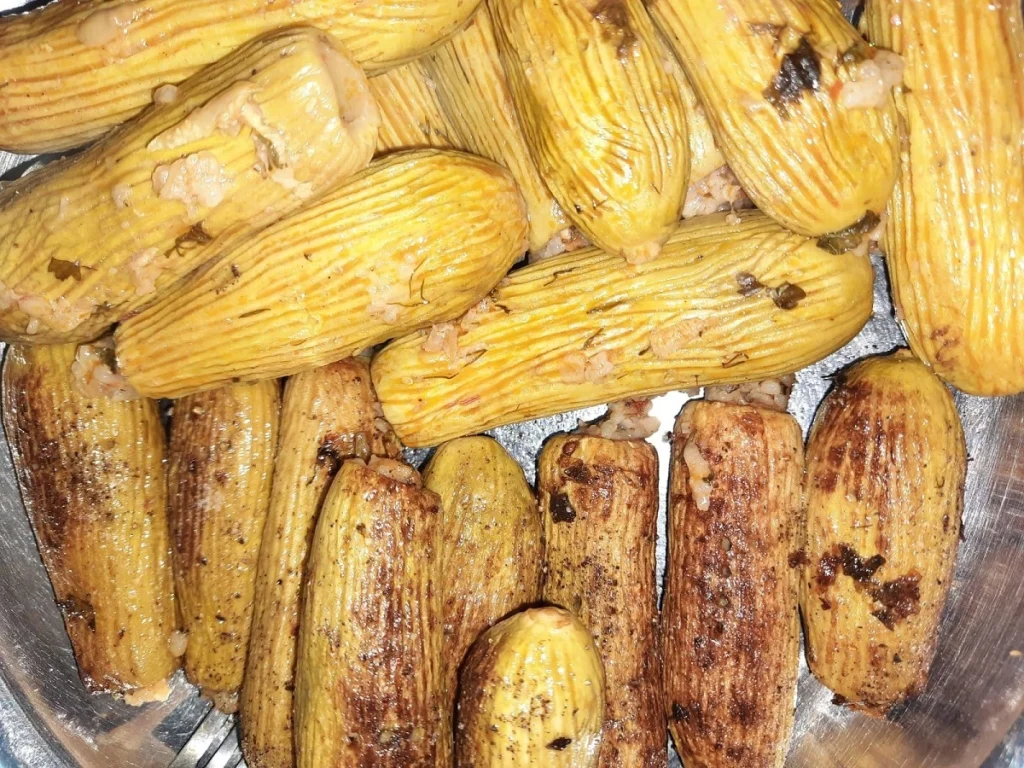
    Food of Holy Week.. Photo: Mahmoud Dowair

    Sprouted Beans and the Symbolism of Life Emerging from Death

    Beyond the ecclesiastical rites of the church, Egyptian Christians observe a tapestry of inherited folk customs that carry profound significance, particularly regarding the culinary traditions of Holy Week and the specific meals shared by families during this time.

    Victor Nassim, an accountant, explains that for Copts, fasting is not merely an act of solidarity with the poor; it is a spiritual discipline intended to draw one closer to the Divine through the renunciation of worldly desires. He notes that Holy Week possesses a singular character, marked by an abstinence from sweets, sugars, and appetisers. True fasting, he emphasises, is rooted in rigorous self-discipline rather than the mere avoidance of food; the fasting person should ideally refrain from craving any specific dish.

    He adds that many Christians in Egypt are meticulous about consuming sprouted beans on Good Friday. The beans are wrapped in cloth for three days until they sprout a process that serves as a powerful metaphor for burial and the subsequent emergence of new life, a symbolic nod to the Resurrection. Nassim further explains that following a period of total abstinence from food extending from midnight until six o’clock in the evening on this day some partake in a small amount of vinegar, an act of emotional communion with the suffering of Christ.

    Popular Customs, Not Ecclesiastical Mandates

    Dr. Mina Azer affirms that while Holy Week constitutes the final stretch of Great Lent, many of the associated culinary habits are cultural traditions rather than binding church rituals. They are expressions of a broader societal heritage, akin to the practices found in other seasons and festivals. Nevertheless, these customs carry deep symbolic weight for the faithful, reflecting their spiritual intimacy with the occasion.

    Chief among these traditions is the consumption of spouted beans on Good Friday. The symbolism is striking: life emerging from death, mirrored by the bean seeds that return to growth after being submerged in water. It is a domestic reflection of the Resurrection, which remains the cornerstone of the Christian faith.

    Laura Halim explains that during this week, anything suggesting joy or luxury including sweets, nuts, preserves, and appetizers is strictly avoided. An atmosphere of somber contemplation prevails; many women commit to wearing black attire when attending church services, a visual testament to their participation in this shared spiritual gravity.
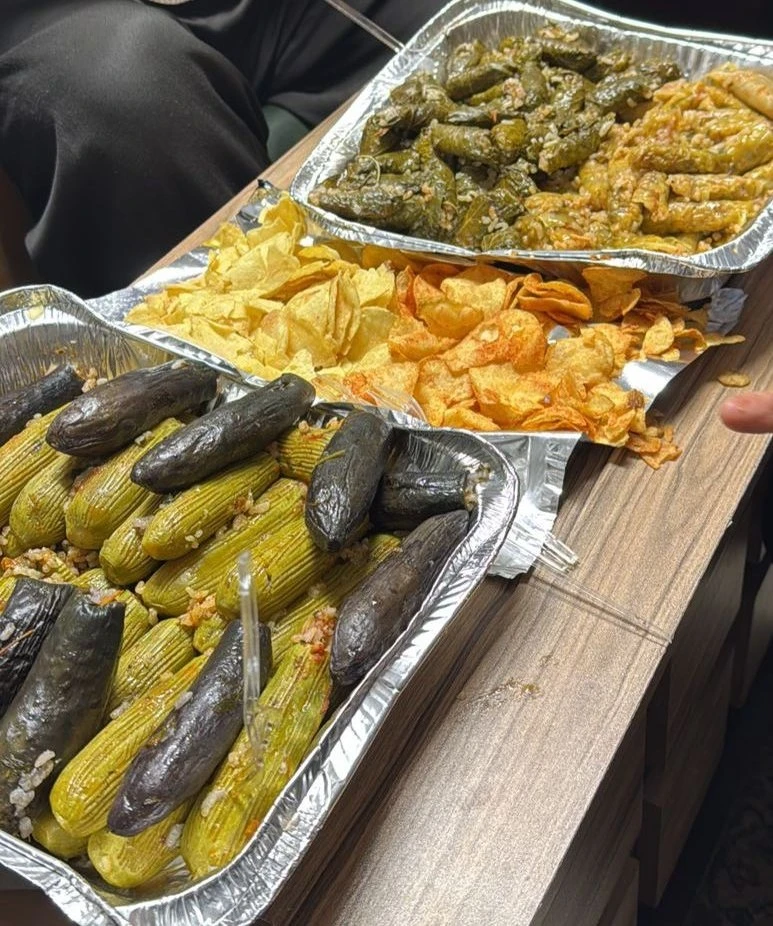
    محشى الكوسة بزيت الزيتون والطماطم وجبة يتم تناولها خلال أسبوع الالام
    Zucchini stuffed with olive oil and tomatoes, a meal eaten during Holy Week.. Photo: Mahmoud Dowair

    Freek and its Connection to Job’s Wednesday

    Laura points out that specific days carry their own distinct culinary markers, such as the consumption of Freek (cracked green wheat) on “Job’s Wednesday” and the preparation of remarkably simple meals on “Maundy Thursday.” Yet, it is Good Friday that remains the most sombre and impactful day of the week. Across Egypt, many observe a strict, abstinent fast, breaking it only with humble fare like sprouted beans.

    She adds that following the quietude of “Holy Saturday,” the focus shifts toward the arrival of the Feast of the Resurrection. After a sustained period of mourning and meditation, an atmosphere of joy gradually returns to both the sanctuary and the home.

    Falafel and the Symbolism of the Seal

    For many households, the table becomes a canvas for the week’s spiritual journey. Hanan Abdel Malak explains that specific foods, like grape leaves, are traditional on Good Friday, but it is the falafel that carries a unique symbolic burden. To some, its round form represents the heavy seal of the tomb, while the sprouted beans signal the life stirring within. Together, they reflect the profound transition from mourning to hope that defines the Coptic experience.

    coptic Coptic fasting Food Holy Week rituals traditions
    Share. Facebook Twitter Pinterest LinkedIn Tumblr Email
    Previous ArticlePalms, Crowns, and Crosses: How Egypt’s Coptic Christians Celebrate Palm Sunday in Upper Egypt
    Next Article The Silence of the Saws: How an Unwritten Law Gives Egypt’s Furniture Capital a Rest
    Bab Masr

    Related Posts

    The Sanctuary of Saint Bishoy: A Living Ledger of Egyptian Monasticism

    2026-05-13

    The Preservation Paradox: Why Humanity, Not Time, Is the Greatest Threat to Heritage

    2026-05-06

    Remembering Hani Shukrallah

    2026-05-05

    Comments are closed.

    Recent Posts
    • The Woven Skeleton: The Palm Frond Artisans of Kafr Al-Battikh Fend Off a Plastic Tide
    • The Sanctuary of Saint Bishoy: A Living Ledger of Egyptian Monasticism
    • Shadows Over the Nile: Concrete Construction Spark Criticism Beneath the Temple of Kalabsha
    • The Damanhur Opera House: A Sovereign Union of Italian Elegance and Islamic Heritage
    • The Silent Outposts of Port Said: Ruins Beyond the Reach of Visitors
    Recent Comments
    • Binance美国注册 on An exhibition in Paris reimagines Cleopatra, far from Western narratives
    • binance "oppna konto on An exhibition in Paris reimagines Cleopatra, far from Western narratives
    • código de referencia de Binance on Art exhibition documents the first Egyptian Scout postage stamp at the National Museum of Civilization
    • Binance账户创建 on Between popular religiosity and the benevolence of the Quran, how can beauty be reconnected with “Sayyida Zeinab”?
    • phoenix game on Theater never dies… Mansoura saves its heritage and restores it as an opera house
    About Us
    About Us

    Your source for the lifestyle news. This demo is crafted specifically to exhibit the use of the theme as a lifestyle site. Visit our main page for more demos.

    We're accepting new partnerships right now.

    Email Us: info@example.com
    Contact: +1-320-0123-451

    Facebook X (Twitter) Pinterest YouTube WhatsApp
    Our Picks

    The Woven Skeleton: The Palm Frond Artisans of Kafr Al-Battikh Fend Off a Plastic Tide

    2026-05-14

    The Sanctuary of Saint Bishoy: A Living Ledger of Egyptian Monasticism

    2026-05-13

    Shadows Over the Nile: Concrete Construction Spark Criticism Beneath the Temple of Kalabsha

    2026-05-13
    Most Popular

    Shadows Over the Nile: Concrete Construction Spark Criticism Beneath the Temple of Kalabsha

    2026-05-135 Views

    The Sanctuary of Saint Bishoy: A Living Ledger of Egyptian Monasticism

    2026-05-132 Views

    Scientific trip to explore Upper Egypt temples

    2026-03-062 Views
    Demo
    Latest Posts

    The Woven Skeleton: The Palm Frond Artisans of Kafr Al-Battikh Fend Off a Plastic Tide

    2026-05-140 Views

    The Sanctuary of Saint Bishoy: A Living Ledger of Egyptian Monasticism

    2026-05-132 Views

    Shadows Over the Nile: Concrete Construction Spark Criticism Beneath the Temple of Kalabsha

    2026-05-135 Views

    The Damanhur Opera House: A Sovereign Union of Italian Elegance and Islamic Heritage

    2026-05-111 Views
    Stay In Touch
    • Facebook
    • Twitter
    • Pinterest
    • Instagram
    • YouTube
    • Vimeo
    Don't Miss

    Shadows Over the Nile: Concrete Construction Spark Criticism Beneath the Temple of Kalabsha

    By Bab Masr2026-05-13

    A controversy erupts in Aswan as new concrete structures at the Temple of Kalabsha spark…

    The Sanctuary of Saint Bishoy: A Living Ledger of Egyptian Monasticism

    2026-05-13

    Scientific trip to explore Upper Egypt temples

    2026-03-06

    Subscribe to Updates

    Get the latest creative news from SmartMag about art & design.

    Demo
    Demo
    Latest Posts

    The Woven Skeleton: The Palm Frond Artisans of Kafr Al-Battikh Fend Off a Plastic Tide

    2026-05-140 Views

    The Sanctuary of Saint Bishoy: A Living Ledger of Egyptian Monasticism

    2026-05-132 Views

    Shadows Over the Nile: Concrete Construction Spark Criticism Beneath the Temple of Kalabsha

    2026-05-135 Views

    The Damanhur Opera House: A Sovereign Union of Italian Elegance and Islamic Heritage

    2026-05-111 Views
    Stay In Touch
    • Facebook
    • Twitter
    • Pinterest
    • Instagram
    • YouTube
    • Vimeo
    Don't Miss

    Shadows Over the Nile: Concrete Construction Spark Criticism Beneath the Temple of Kalabsha

    By Bab Masr2026-05-13

    A controversy erupts in Aswan as new concrete structures at the Temple of Kalabsha spark…

    The Sanctuary of Saint Bishoy: A Living Ledger of Egyptian Monasticism

    2026-05-13

    Scientific trip to explore Upper Egypt temples

    2026-03-06

    Subscribe to Updates

    Get the latest creative news from SmartMag about art & design.

    Demo
    About Us
    About Us

    Your source for the lifestyle news. This demo is crafted specifically to exhibit the use of the theme as a lifestyle site. Visit our main page for more demos.

    We're accepting new partnerships right now.

    Email Us: info@example.com
    Contact: +1-320-0123-451

    Facebook X (Twitter) Pinterest YouTube WhatsApp
    Our Picks

    The Woven Skeleton: The Palm Frond Artisans of Kafr Al-Battikh Fend Off a Plastic Tide

    2026-05-14

    The Sanctuary of Saint Bishoy: A Living Ledger of Egyptian Monasticism

    2026-05-13

    Shadows Over the Nile: Concrete Construction Spark Criticism Beneath the Temple of Kalabsha

    2026-05-13
    Most Popular

    Shadows Over the Nile: Concrete Construction Spark Criticism Beneath the Temple of Kalabsha

    2026-05-135 Views

    The Sanctuary of Saint Bishoy: A Living Ledger of Egyptian Monasticism

    2026-05-132 Views

    Scientific trip to explore Upper Egypt temples

    2026-03-062 Views
    © 2026 ThemeSphere. Designed by ThemeSphere.

    Type above and press Enter to search. Press Esc to cancel.