





In Upper Egypt, Eid al-Fitr isn’t complete without salted fish. From Asyut to Luxor to Minya, families crowd the markets for feseekh, herring, and a local specialty called molouha. This is the story of a tradition that refuses to fade.
Preparations for Eid al-Fitr in Upper Egypt are not limited to buying new clothes and making cookies and biscuits. They extend to include a special ritual that commands its place on the table: eating feseekh and herring. As Eid approaches, shops selling salted fish come alive and fill with customers, an annual scene that reflects the deep connection between this meal and the joy of the holiday. Although its origins are tied to spring season celebrations, it has become an integral part of Eid al-Fitr festivities, where flavors blend with memories of old homes and the meal transforms into a social ritual that brings families together. Here, Bab Masr documents the traditions of the people of Luxor, Asyut, and Minya in eating these foods.
In Asyut: A Staple Dish for Eid
In Asyut, many families make a point of buying salted fish before Eid al-Fitr. It takes its place as the main dish on tables during the first days of the holiday.
Ramadan Bassiouni, owner of “Feseekhani Al-Bassiouni” shop, is 40 years old and has been in the business long enough to know the rhythms of the season. “As Eid approaches, markets and shops selling salted fish in Asyut experience a surge in activity,” he told “Bab Misr.” “People here consider feseekh and herring an essential part of the holiday. The shops are packed in the final days before Eid.”
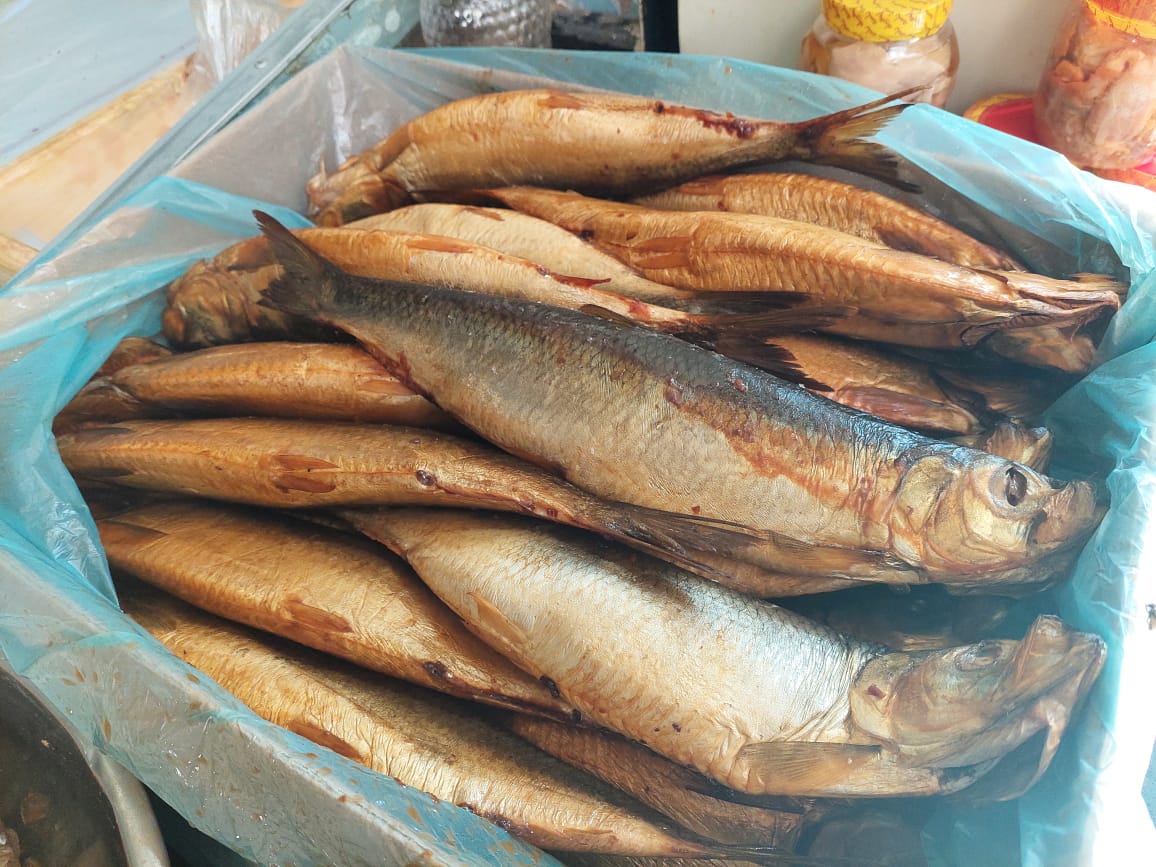
His shop offers several varieties. There is “kelb el-bahr” (sea dog), named for its prominent teeth. There is “al-raya” fish. And there is mullet feseekh, the classic choice.
Prices this year vary by size. Large salted fish runs about 300 pounds per kilo, medium about 280. Mullet feseekh reaches 400 pounds per kilo. Herring comes in several varieties, including luxury “Abu El-Sayed,” which costs about 180 pounds per kilo.
Some customers prefer deboned feseekh in jars for convenience. Others ask for crumbled salted fish, sold by the quarter kilo, half kilo, or full kilo.
“We Feel It Is Eid Itself”
Adham Hussein, a man in his fifties, emerged from a shop with bags of feseekh and herring. “Buying feseekh is a habit we cannot change,” he said. “Eid is not complete without it. We feel it is Eid itself.” He noted that this tradition is not unique to Asyut but extends across Egypt.
Nawal Ali Mohamed, 55, a homemaker, put it simply. “We make sure to go out and buy feseekh and herring. The whole family gathers around them. Even relatives come. Feseekh gives Eid a special character. How could Eid come without it? It is the beautiful gathering on the first day.”
Salted Fish Takes Its Place on Eid Tables
In Luxor Governorate, where ancient history meets daily life, salted fish holds a special place on Eid tables. But here, the tradition takes a different form. Luxor is known for molouha, salted Nile fish, rather than feseekh.
Momen Abdel Hamid is one of the most famous sellers of molouha in Luxor. He inherited the trade from his ancestors and has been working it for about 17 years. His regular customers return year after year.
He brings the fish from Aswan Governorate: “kelb el-bahr” and “al-raya.” These, he explained, are the basis of Luxor’s molouha tradition.
“The people here prefer a good-tasting, relatively low-salt molouha,” he said. “It is different from the Delta, where feseekh rules.”
Mixed Molouha
Customer preferences vary, Abdel Hamid explained. Some prefer molouha made from “kelb el-bahr” fish. Others favor the mixed variety, which is prepared in a special way: fish combined with salt water and tahini, blended until smooth, with lemon added.
During Eid al-Fitr, he noted, some people opt for salted Nile fish as a change from their usual choices.
The Difference Between Feseekh and Molouha
Abdel Hamid laid out the distinction clearly. “Feseekh is usually made from saltwater sea fish. It is preferred by people in Cairo, the Delta, and governorates like Kafr El-Sheikh and Beheira. Mullet is the most famous type. But it does not withstand the high temperatures in Upper Egypt. You cannot store it for more than ten days.”
“In Luxor and Aswan, people prefer molouha made from Nile River fish like ‘kelb el-bahr’ and ‘al-raya.’ These can be stored for two to five months. They can even be transported to other governorates without spoiling.”
How to Store Molouha
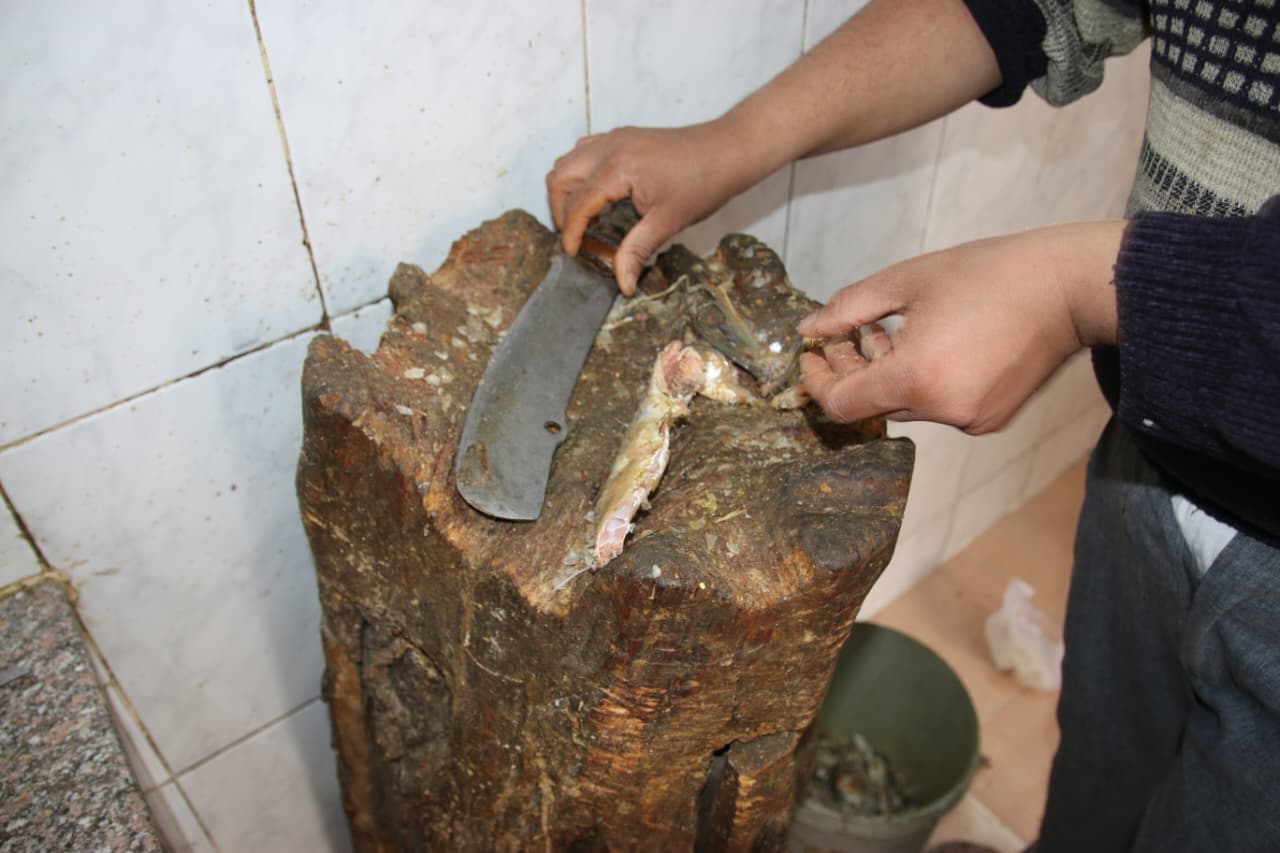
The key to good molouha is proper storage. The fish is salted and left for up to three months until it matures and turns red. If stored incorrectly, it spoils. Transport requires careful wrapping and preservation.
Feseekh, by contrast, is prepared differently. It is cleaned thoroughly, opened, and then lemon and oil are added just before eating. This is the common method in the Delta.
As for signs of spoilage, Abdel Hamid pointed to color. Bad fish turns dark. Good molouha is red with balanced saltiness. He advised buyers to look closely before purchasing.
Memories: Molouha for One Pound
Hag Ahmed, a regular customer from Luxor, has been buying from Momen’s shop for years. He recalled the old days, when prices started at just one pound and reached only ten.
This time, he was buying for guests who love salted fish. He chose this shop specifically for them. He has always eaten salted fish, both on ordinary days and during holidays like Eid al-Fitr and Sham El-Nessim, when the family gathers around them.
The Sultan of Feseekh in Minya
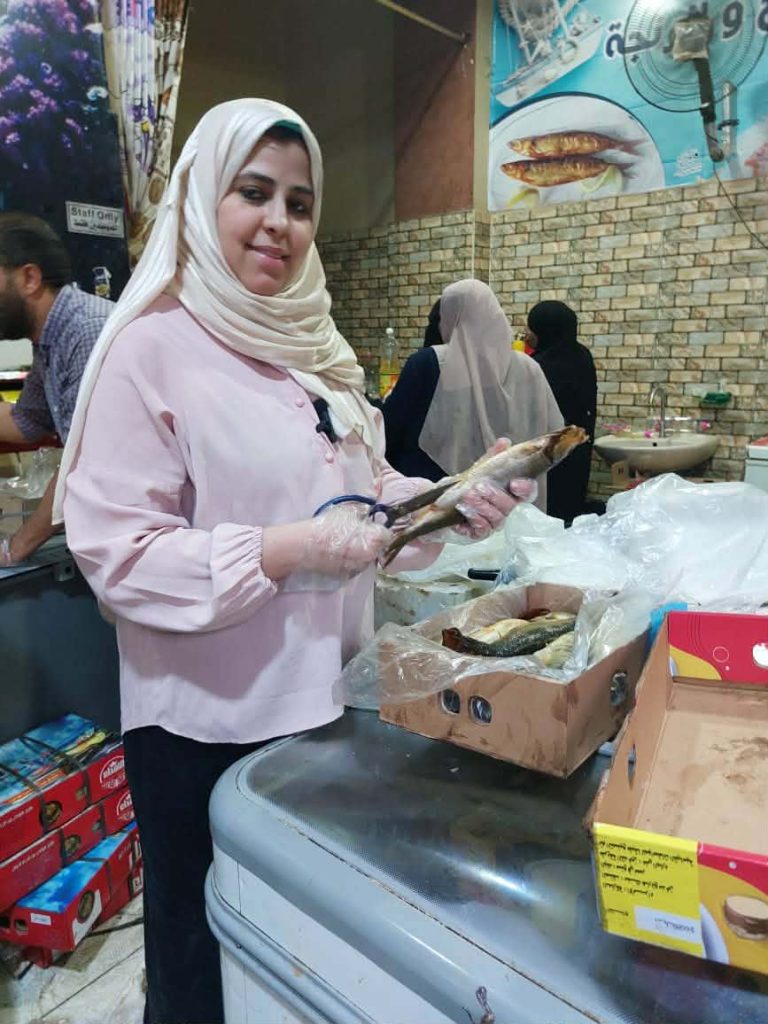
In Minya, alongside the crowds buying Eid clothes and cookies, feseekh and herring shops see their own rush. The smell of salted fish leads you to the shop of Aisha Abdel Kafi, known locally as the “Sultan of Feseekh.” Lines form. Customers wait.
Aisha is young. She fell in love with this trade and decided to make it her own. She began by creating new varieties: feseekh sandwiches, herring sandwiches, and more.
Herring Shawarma and Feseekh Trays
At the start, Aisha converted part of her home into a small workshop. She marketed her products online. Eventually, she opened a shop. Her offerings grew: Aswani feseekh, mullet feseekh, herring shawarma, feseekh trays, molouha paste, and sandwiches of all kinds.
She attributes her success to variety and innovation. “Every seller has a secret to their craft,” she said. “Thank God, I have achieved great success. The reason is honesty and cleanliness.”
Demand follows the calendar. During Ramadan, people avoid salty foods. But as Eid approaches, business booms. Feseekh remains the most famous, especially local feseekh for its quality and taste. Herring, with its reasonable price, is the most widespread, alongside sardines and molouha.
Innovative Offerings
Aisha has built a following by thinking differently. She recommends feseekh salad with lemon and mint, or with ginger and orange. Herring salad with potatoes. Roe salad. “Umm al-khulul,” a pickled vegetable dish, soaked in vinegar and served with lemon.
She has also created new dishes: grilled herring over charcoal, herring crepes with potatoes, herring hawawshi with mozzarella, feseekh and herring burgers and pizza, baked herring with potatoes, and roe casserole.
Her most popular item, she said, is the feseekh sandwich. Deboned feseekh mixed with tahini, oil, lemon, and vinegar, stuffed into baladi bread with green onions, peppers, and tomatoes. Customers also ask for feseekh salad and, for special occasions, “feseekh cake.”
Tips for Buying and Storing Feseekh and Herring
Aisha advises buying only from trusted sources. Open the fish before purchasing. Check the flesh. Avoid anything with strange colors, like blue, or a white layer. These indicate spoilage.
For storage, clean herring of skin and bones. Store it in a mixture of oil, lemon, and vinegar in the refrigerator until serving time. And serve it with plenty of vegetables: lettuce, arugula, cucumbers, tomatoes, onions. The greens balance the salt. The tradition continues.
