



Close Menu
باب مصرباب مصر

    Subscribe to Updates

    Get the latest creative news from FooBar about art, design and business.

    What's Hot

    The Woven Skeleton: The Palm Frond Artisans of Kafr Al-Battikh Fend Off a Plastic Tide

    2026-05-14

    The Sanctuary of Saint Bishoy: A Living Ledger of Egyptian Monasticism

    2026-05-13

    Shadows Over the Nile: Concrete Construction Spark Criticism Beneath the Temple of Kalabsha

    2026-05-13
    Facebook X (Twitter) Instagram
    Facebook X (Twitter) Instagram YouTube LinkedIn
    باب مصرباب مصر
    Contact US
    باب مصرباب مصر
    Home»Upper Egypt»Sesame stalks adorn the fields.. Harvest season from drying to threshing
    Upper Egypt

    Sesame stalks adorn the fields.. Harvest season from drying to threshing

    Moussa AdelBy Moussa Adel2025-09-11Updated:2026-05-20No Comments4 Mins Read0 Views
    Facebook Twitter Pinterest LinkedIn Tumblr Email
    Share
    Facebook Twitter LinkedIn Pinterest WhatsApp Email

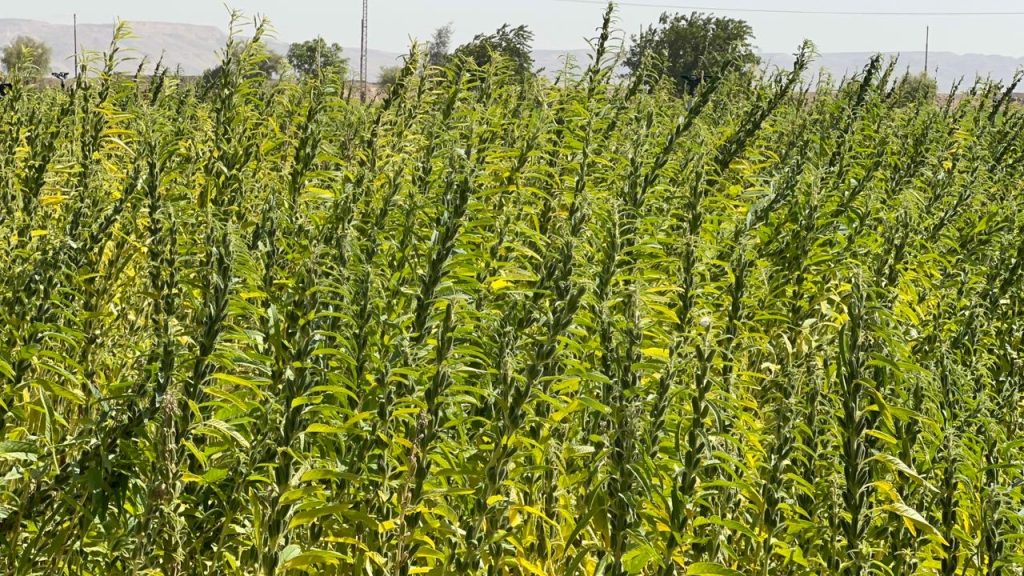
    Green stalks stand tall and dense in the fields under the hot Upper Egyptian sun, heralding the sesame harvest season. Sesame, whose history dates back to ancient Egypt, remains a symbol of agricultural identity and is still present on the tables of Upper Egyptians today.

    Sesame stalks

    Amidst the dense sesame stalks, with green leaves decorating the fields at this time of year. Inside them are capsules filled with seeds. In the village of Rifaa al-Tahtawi—known as the “village of young graduates”—in the Abnub district of Assiut governorate, Mustafa Abu Omar, a sesame farmer, stands joyfully with his harvest.

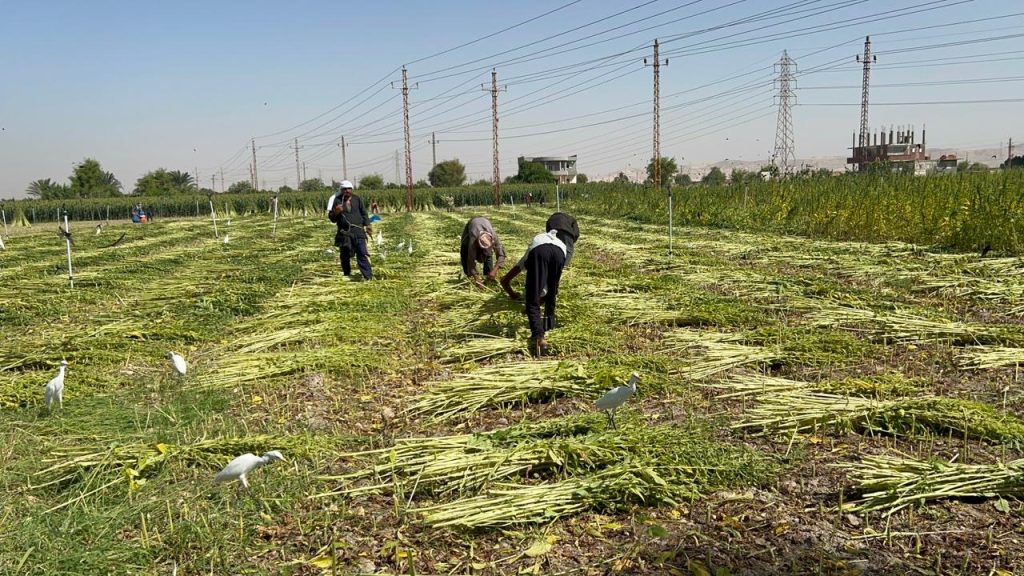
    He says: Sesame is a crop that requires a lot of attention from farmers, from the very beginning, from fertilizing the land and protecting it until harvest. Harvesting is only done by experienced workers. We cut the stalks and then gather them into bundles in the shape of dolls and leave them in the sun for up to three weeks until they are completely dry, after which the threshing process begins. .

    The bundles preserve the crop

    Farmer Tuba Faisal explains: “Stacking the sesame stalks in bundles is an ancient method we use to preserve the crop. We leave them in the sun for about three weeks until the seeds are ripe and the pods open. Placing the sticks in vertical bundles prevents the seeds from falling on the ground and reduces waste.
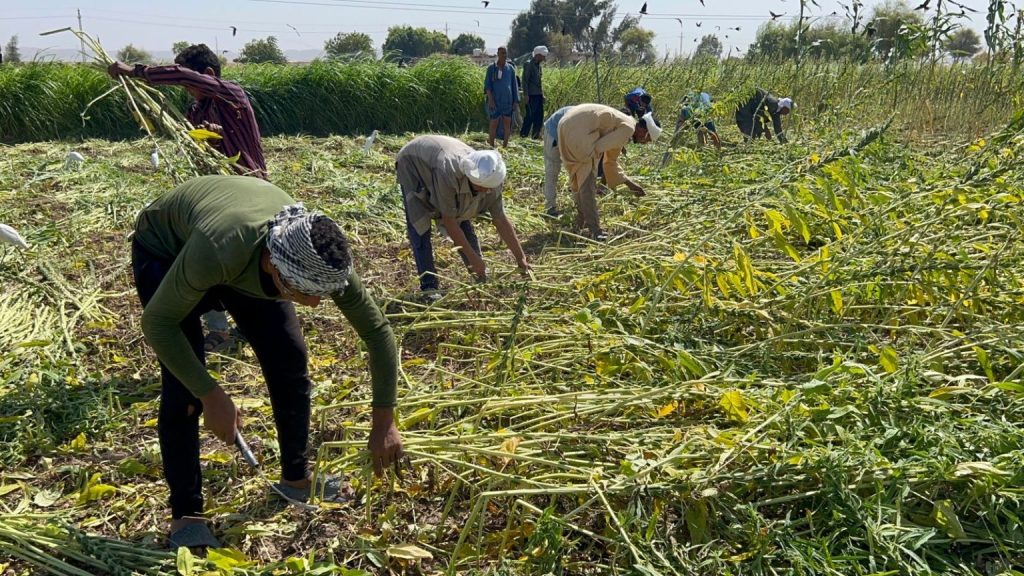
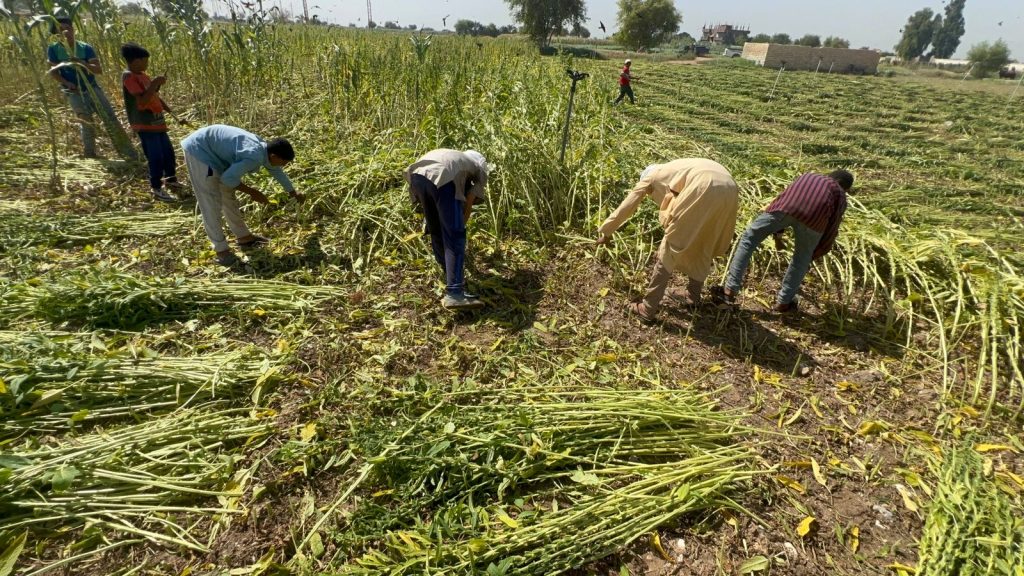
    Sesame harvest.. Photo by Hassan Fathy
    Sesame harvest.. Photo by Hassan Fathy
    Sesame harvest.. Photo by Hassan Fathy
    Sesame harvest.. Photo by Hassan Fathy
    Threshing sesame

    Abu Omar continues: “In the past, before the threshing machine was introduced, we used to thresh the sesame. We would spread mats on the ground and beat the bundles with sticks to knock the seeds out, but it was a difficult and tiring process.”

    With the introduction of threshing machines, the process changed, but despite the use of sieves, the results are not entirely satisfactory. The seeds get mixed up with dust and seeds from other plants. Therefore, manual purification remains necessary, a task that Al-Qarqari performs using sieves to extract sesame seeds of the highest purity. Abu Omar emphasizes that the price of sesame depends on the size and quality of the seeds, which requires great care from planting to harvest.

    Popular dishes

    Mohammed Ibrahim, a pensioner, says: “The people in villages that traditionally grow sesame are famous for dishes such as sesame sauce, which is made by mixing ground sesame seeds with ground cumin and coriander. It is a very healthy dish because it contains calcium, fiber, and healthy sesame fats. It is also a popular and beloved dish.”
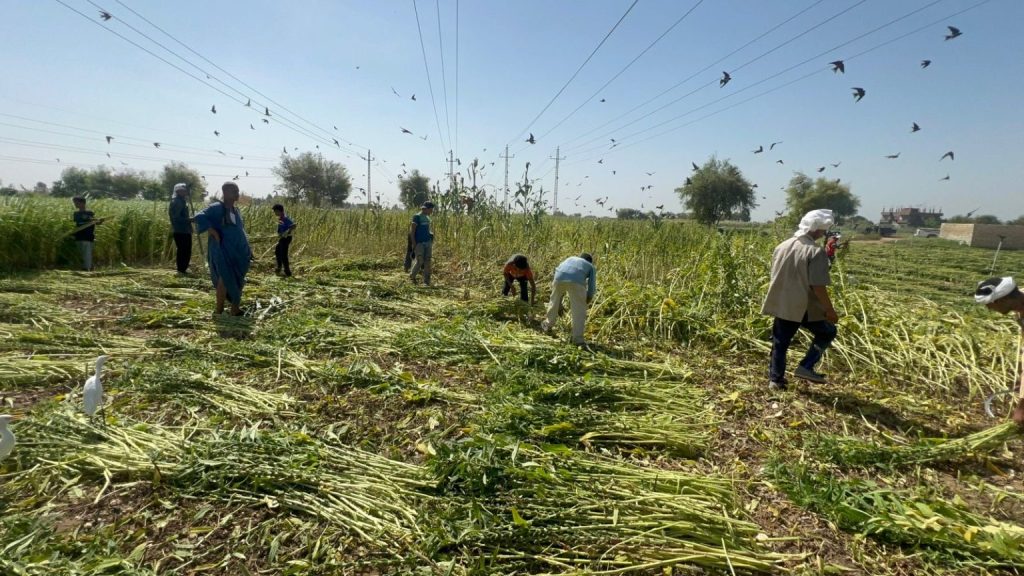
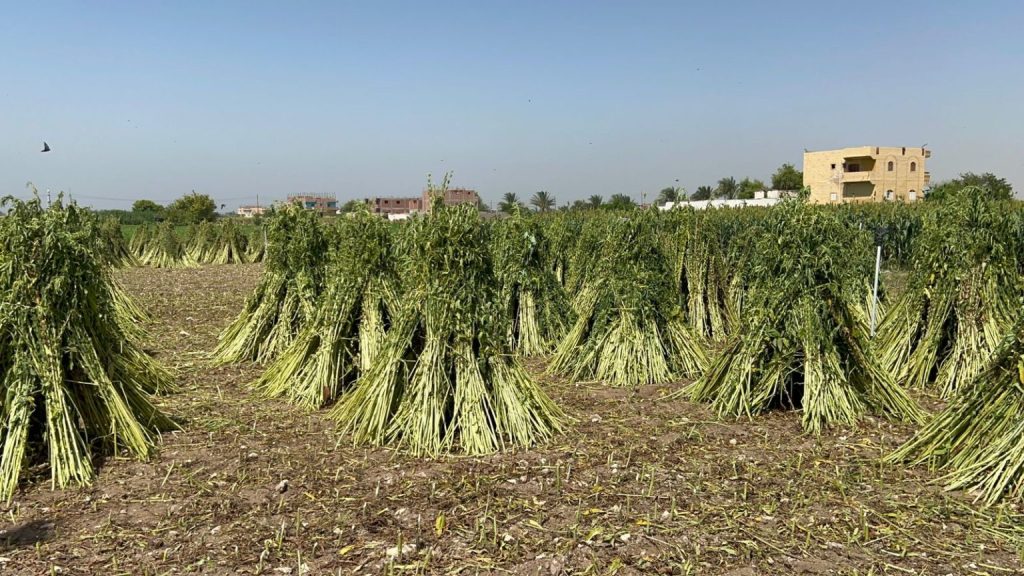
    Sesame harvest.. Photo by Hassan Fathy
    Sesame harvest.. Photo by Hassan Fathy
    Sesame harvest.. Photo by Hassan Fathy
    Sesame harvest.. Photo by Hassan Fathy
    Historical overview

    Sesame is one of the oldest oil crops in the world. Evidence of its use has been found in ancient Egypt, where its seeds were found in the tomb of King Tutankhamun (1350 BC). Drawings of the sesame plant have also been found in the tomb of Ramses III. Cups filled with sesame seeds were found in the tombs of Thebes.

    Numerous writings on life in Pharaonic Egypt indicate that the ancient Egyptians used sesame seeds and oil in food. It was among the oils used in mummification and the manufacture of cosmetics. The Ebers Papyrus, the oldest medical papyrus, describes numerous medical recipes that include sesame.

    Cultivation and production

    Dr. Asmaa Abdel Halim, head of research at the Oil Crops Department of the Field Crops Institute at the Agricultural Research Center, explains: “Sesame cultivation begins in early April and continues until the end of May. It requires well-drained or sandy soil and is not suitable for saline soils unless the appropriate fertilizers are added.”

    She adds: “Sesame is one of the most important industrial oil crops. It is used in the manufacture of tahini, halva, sweets, and baked goods.”

    Abdel Halim points out that Egypt cultivates three main varieties: (Shandawili 3) has a yield of 7 to 8 ardebs per feddan and is characterized by its white seeds. The second variety is Toshka 1, which yields 6 to 7 ardebs per acre and has a creamy color. The third variety, Sohag 1, is red in color and yields 6 to 7 ardebs per acre. Farmers prefer the creamy variety for use in the food industry.
    Sesame.. Photo by Hassan Fathy
    Sesame.. Photo by Hassan Fathy
    Sesame harvest.. Photo by Hassan Fathy
    Sesame harvest.. Photo by Hassan Fathy
    A promising crop

    The sesame harvest in Assiut begins in early September. In 2025, the area planted with sesame reached approximately 1,801 acres, with a yield ranging from 500 to 800 kg per acre. Farmers describe this year’s harvest as promising and are calling on the government to provide more fertilizer.

    Share. Facebook Twitter Pinterest LinkedIn Tumblr Email
    Previous ArticleThe mysterious “Lake Al-Bahansa”: a natural phenomenon or a hidden danger?
    Next Article Map of smuggled antiquities stolen from Egypt to John F. Kennedy Airport in the US | Official documents
    Moussa Adel

    Related Posts

    The Sanctuary of Saint Bishoy: A Living Ledger of Egyptian Monasticism

    2026-05-13

    Shadows Over the Nile: Concrete Construction Spark Criticism Beneath the Temple of Kalabsha

    2026-05-13

    The Last Cobblers of Luxor: A Craft Contesting the Modern Tide

    2026-05-10

    Comments are closed.

    Recent Posts
    • The Woven Skeleton: The Palm Frond Artisans of Kafr Al-Battikh Fend Off a Plastic Tide
    • The Sanctuary of Saint Bishoy: A Living Ledger of Egyptian Monasticism
    • Shadows Over the Nile: Concrete Construction Spark Criticism Beneath the Temple of Kalabsha
    • The Damanhur Opera House: A Sovereign Union of Italian Elegance and Islamic Heritage
    • The Silent Outposts of Port Said: Ruins Beyond the Reach of Visitors
    Recent Comments
    • Binance美国注册 on An exhibition in Paris reimagines Cleopatra, far from Western narratives
    • binance "oppna konto on An exhibition in Paris reimagines Cleopatra, far from Western narratives
    • código de referencia de Binance on Art exhibition documents the first Egyptian Scout postage stamp at the National Museum of Civilization
    • Binance账户创建 on Between popular religiosity and the benevolence of the Quran, how can beauty be reconnected with “Sayyida Zeinab”?
    • phoenix game on Theater never dies… Mansoura saves its heritage and restores it as an opera house
    About Us
    About Us

    Your source for the lifestyle news. This demo is crafted specifically to exhibit the use of the theme as a lifestyle site. Visit our main page for more demos.

    We're accepting new partnerships right now.

    Email Us: info@example.com
    Contact: +1-320-0123-451

    Facebook X (Twitter) Pinterest YouTube WhatsApp
    Our Picks

    The Woven Skeleton: The Palm Frond Artisans of Kafr Al-Battikh Fend Off a Plastic Tide

    2026-05-14

    The Sanctuary of Saint Bishoy: A Living Ledger of Egyptian Monasticism

    2026-05-13

    Shadows Over the Nile: Concrete Construction Spark Criticism Beneath the Temple of Kalabsha

    2026-05-13
    Most Popular

    Shadows Over the Nile: Concrete Construction Spark Criticism Beneath the Temple of Kalabsha

    2026-05-135 Views

    The Sanctuary of Saint Bishoy: A Living Ledger of Egyptian Monasticism

    2026-05-132 Views

    The Healing Arteries of Dakhla: Harnessing the Geothermal Riches of the New Valley

    2026-05-062 Views
    Demo
    Latest Posts

    The Woven Skeleton: The Palm Frond Artisans of Kafr Al-Battikh Fend Off a Plastic Tide

    2026-05-140 Views

    The Sanctuary of Saint Bishoy: A Living Ledger of Egyptian Monasticism

    2026-05-132 Views

    Shadows Over the Nile: Concrete Construction Spark Criticism Beneath the Temple of Kalabsha

    2026-05-135 Views

    The Damanhur Opera House: A Sovereign Union of Italian Elegance and Islamic Heritage

    2026-05-111 Views
    Stay In Touch
    • Facebook
    • Twitter
    • Pinterest
    • Instagram
    • YouTube
    • Vimeo
    Don't Miss

    Shadows Over the Nile: Concrete Construction Spark Criticism Beneath the Temple of Kalabsha

    By Bab Masr2026-05-13

    A controversy erupts in Aswan as new concrete structures at the Temple of Kalabsha spark…

    The Sanctuary of Saint Bishoy: A Living Ledger of Egyptian Monasticism

    2026-05-13

    The Healing Arteries of Dakhla: Harnessing the Geothermal Riches of the New Valley

    2026-05-06

    Subscribe to Updates

    Get the latest creative news from SmartMag about art & design.

    Demo
    Demo
    Latest Posts

    The Woven Skeleton: The Palm Frond Artisans of Kafr Al-Battikh Fend Off a Plastic Tide

    2026-05-140 Views

    The Sanctuary of Saint Bishoy: A Living Ledger of Egyptian Monasticism

    2026-05-132 Views

    Shadows Over the Nile: Concrete Construction Spark Criticism Beneath the Temple of Kalabsha

    2026-05-135 Views

    The Damanhur Opera House: A Sovereign Union of Italian Elegance and Islamic Heritage

    2026-05-111 Views
    Stay In Touch
    • Facebook
    • Twitter
    • Pinterest
    • Instagram
    • YouTube
    • Vimeo
    Don't Miss

    Shadows Over the Nile: Concrete Construction Spark Criticism Beneath the Temple of Kalabsha

    By Bab Masr2026-05-13

    A controversy erupts in Aswan as new concrete structures at the Temple of Kalabsha spark…

    The Sanctuary of Saint Bishoy: A Living Ledger of Egyptian Monasticism

    2026-05-13

    The Healing Arteries of Dakhla: Harnessing the Geothermal Riches of the New Valley

    2026-05-06

    Subscribe to Updates

    Get the latest creative news from SmartMag about art & design.

    Demo
    About Us
    About Us

    Your source for the lifestyle news. This demo is crafted specifically to exhibit the use of the theme as a lifestyle site. Visit our main page for more demos.

    We're accepting new partnerships right now.

    Email Us: info@example.com
    Contact: +1-320-0123-451

    Facebook X (Twitter) Pinterest YouTube WhatsApp
    Our Picks

    The Woven Skeleton: The Palm Frond Artisans of Kafr Al-Battikh Fend Off a Plastic Tide

    2026-05-14

    The Sanctuary of Saint Bishoy: A Living Ledger of Egyptian Monasticism

    2026-05-13

    Shadows Over the Nile: Concrete Construction Spark Criticism Beneath the Temple of Kalabsha

    2026-05-13
    Most Popular

    Shadows Over the Nile: Concrete Construction Spark Criticism Beneath the Temple of Kalabsha

    2026-05-135 Views

    The Sanctuary of Saint Bishoy: A Living Ledger of Egyptian Monasticism

    2026-05-132 Views

    The Healing Arteries of Dakhla: Harnessing the Geothermal Riches of the New Valley

    2026-05-062 Views
    © 2026 ThemeSphere. Designed by ThemeSphere.

    Type above and press Enter to search. Press Esc to cancel.