




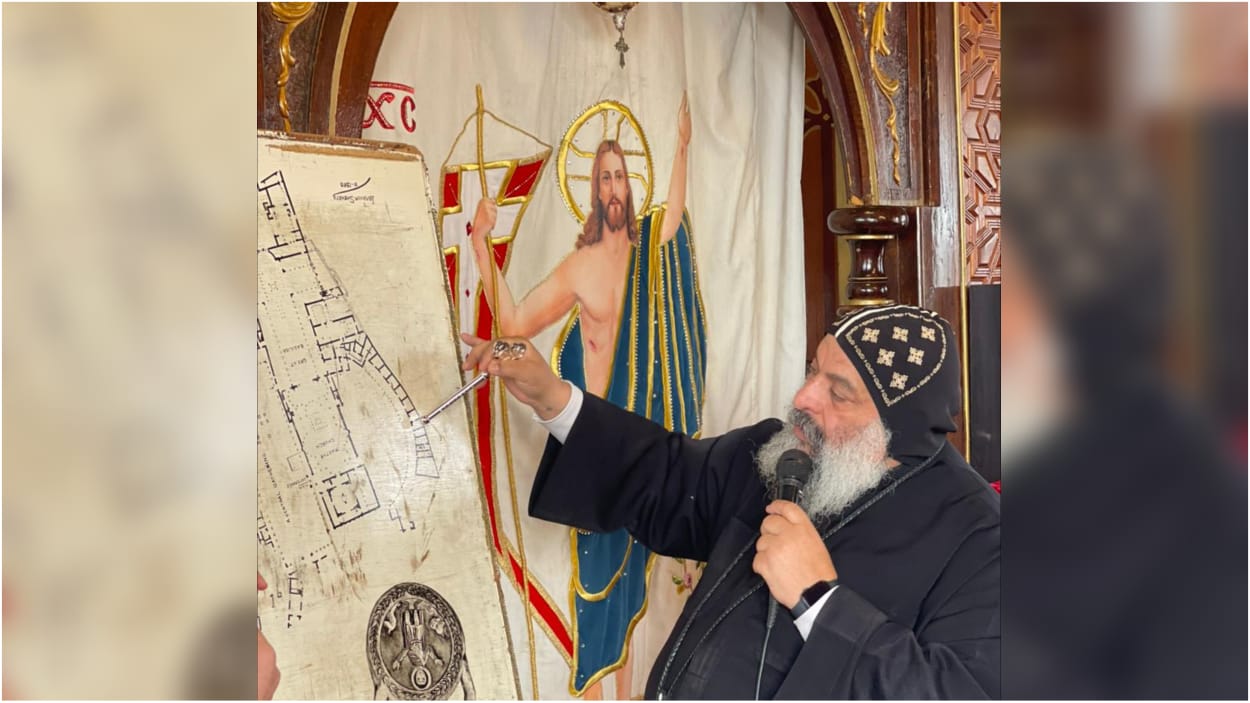
The archaeological site of Abu Mina in Borg Al Arab, Alexandria, one of the holiest Coptic shrines in the world, has been removed from UNESCO’s “List of World Heritage in Danger” during the 47th session of the World Heritage Committee at the organization’s headquarters in Paris. This comes after years of threats, neglect, and concern over the fate of the historic city, nicknamed “the marble city,” which was once the second most important pilgrimage site after Jerusalem and a destination for healing.
In an exclusive interview with Bab Al-Masr, Father Tadaos Afamina, head of antiquities at the Monastery of St. Mina and coordinator of relations between the Coptic Church and the Ministry of Tourism and Antiquities, who believes that stone is no less sacred than words, spoke about the fate of the only Coptic Orthodox monument listed on UNESCO’s World Heritage List, He also discusses the rescue project, the challenges faced by this rare Coptic site, and future plans to transform Abu Mina into a global attraction and living museum.
-
First of all, congratulations on this achievement. Was the inclusion of Abu Mina on the agenda of the 47th session of UNESCO in Paris planned in advance?
-
-
What were the key steps that led to this success?
-
-
How did the site deteriorate to this extent?
-
During the years of work, were there fears that the site would be lost or that it could not be saved?
-
What were the main challenges you faced during the rescue operation?
-
Tell us about dealing with the encroachments that existed on the site. How was coordination with the security authorities to remove them? What is the position of the local community?
-
As the person responsible for the archaeological site, how did your academic studies (master’s and doctorate) help you make practical decisions about Abu Mina?
-
What is the exceptional value that led to the selection of Abu Mina as a World Heritage Site?
-
What is the difference between the archaeological site of Abu Mina and the modern monastery in terms of function and role?
***
A large church made entirely of marble was later built by Pope Athanasius, the 20th patriarch. Then a large cathedral was built by Pope Theophilus, the 23rd patriarch, in the 5th century. However, after the Persians conquered the cities and cut off the roads, the place began to fall into ruin. The Abbasid Caliph Al-Mu’tasim sent a man named Aliazar al-Dimashqi to bring marble from Egypt, and he uprooted the marble columns from the city. The city was last seen when Muhammad Ali Pasha completely buried it because thieves were hiding there. Until its rediscovery in 1905 by a Catholic priest, who discovered a three-part manuscript about Saint Mar Mina, the site was unknown. On his return to Germany, he took with him 100 boxes of artifacts from the city, which he used to establish the Frankfurt Museum in Germany.-
What is the next plan to reopen the area as a global tourist attraction? When can we expect this to happen?
-
Where will the hotel be built? Will it be located within the archaeological site?
-
What is the fate of the archaeological artifacts belonging to the city of Abu Mina? Are there plans to display them in a museum in the area?
-
Do you have any plans to return some of the artifacts from the Coptic Museum to the Abu Mina site? What is the Ministry of Antiquities’ position on this request?
-
What facilities are planned to welcome visitors to the Abu Mina archaeological site?
-
Abu Mina was a global center for pilgrimage and healing. Are there plans to integrate the area into Egypt’s tourist circuit in cooperation with international entities?
-
What is the nature of the daily coordination between the Monastery of St. Mina and the Ministry of Tourism and Antiquities? Are there any permanent cooperation protocols?
-
How do you assess the role of the local community in protecting the site after the removal of encroachments? Has the local community’s perception of the area changed?
-
Is there currently a permanent committee to monitor maintenance and environmental control of the site?
-
Are there any long-term plans to ensure the stability of groundwater levels in the future?
-
Are there any environmental studies monitoring the impact of salt water on the remaining archaeological formations?
-
Do you think the success of Abu Mena could inspire similar projects to save endangered archaeological sites in Upper Egypt or the Nile Delta?
-
What is your message to the new generations of Coptic and Egyptian youth about the importance of preserving spiritual and archaeological heritage?
