



Close Menu
باب مصرباب مصر

    Subscribe to Updates

    Get the latest creative news from FooBar about art, design and business.

    What's Hot

    The Woven Skeleton: The Palm Frond Artisans of Kafr Al-Battikh Fend Off a Plastic Tide

    2026-05-14

    The Sanctuary of Saint Bishoy: A Living Ledger of Egyptian Monasticism

    2026-05-13

    Shadows Over the Nile: Concrete Construction Spark Criticism Beneath the Temple of Kalabsha

    2026-05-13
    Facebook X (Twitter) Instagram
    Facebook X (Twitter) Instagram YouTube LinkedIn
    باب مصرباب مصر
    Contact US
    باب مصرباب مصر
    Home»Uncategorized»“Simsimiyya Forum” celebrates global documentation and local demands to support musicians
    Uncategorized

    “Simsimiyya Forum” celebrates global documentation and local demands to support musicians

    Mohamed AwadBy Mohamed Awad2025-08-20Updated:2026-05-20No Comments6 Mins Read0 Views
    Facebook Twitter Pinterest LinkedIn Tumblr Email
    Share
    Facebook Twitter LinkedIn Pinterest WhatsApp Email

    While Dr. Nahla Imam, advisor to the Minister of Culture for Intangible Heritage, called at the third Simsimiyya Festival in Ismailia for folk musicians, including simsimiyya players, to join the Musicians’ Union because they need social security, pensions, and union support, Mohamed Mida, the last simsim player in the city, sat alone in an outdoor lobby in front of the theater, demanding support and exemption from paying royalties. Mohamed Mida, the last simsimiyya maker in the city, sat alone in an outdoor lobby in front of the theater, demanding support and exemption from paying fees for using his workshop in the city center.

    Mohamed Mida presented his collection of simsimiyya instruments at an open exhibition hastily prepared on the morning of the forum, in front of Dr. Ahmed Fouad Hanou, Minister of Culture, Major General Akram Galal, Governor of Ismailia, and Major General Khaled Foda, Advisor to the President of the Republic for Local Development. However, he did not stay to watch the celebrations, preferring to sit alone among his musical instruments.

    Support for simsimiyya players

    In her speech during the opening of the forum, Dr. Nahla Imam said: “I hope that the Musicians’ Union will consider including simsimiyya players among its members. They have the right to insurance and support from the union to preserve the instrument and its heritage.” She added: “We have the right to be proud of being the bearers of the simsimiyya heritage. We have managed to preserve it over time despite the challenges and difficulties.” “I play the simsimiyya and the exhibition is my livelihood,” Mohamed Mida told Bab Masr – Bahri.

    I have been retired for seven years. The neighborhood asked me for the right to use the exhibition in Arabi Square. I ask the Minister of Culture and the Governor of Ismailia to exempt me from the fees required of me for the right to use the Ismailia exhibition, in honor of me, because I belong to the culture and the governorate. I created this exhibition to preserve the heritage of the instrument and the governorate.”

    Mida has been running a simsimiyya exhibition in Al-Arab Square in central Ismailia for nearly 10 years. There, he displays his work as a maker of the instrument and his collection of old instruments that he has played. He was a lead player in the Ismailia Folk Instruments Band of the Ministry of Culture before his retirement.

    Despite being invited as the last instrument maker in the city, Mohamed Mida did not attend the ceremony honoring the icons of the simsimiyya during the opening. The Ministry of Culture honored the late Zakaria Ibrahim, founder of the Tamboura band in Port Said, and Yehia Moller, director of the Ismailia Folk Instruments Band. Sayed Kaboria, the oldest player and maker of the instrument in the city of Suez, was also honored.
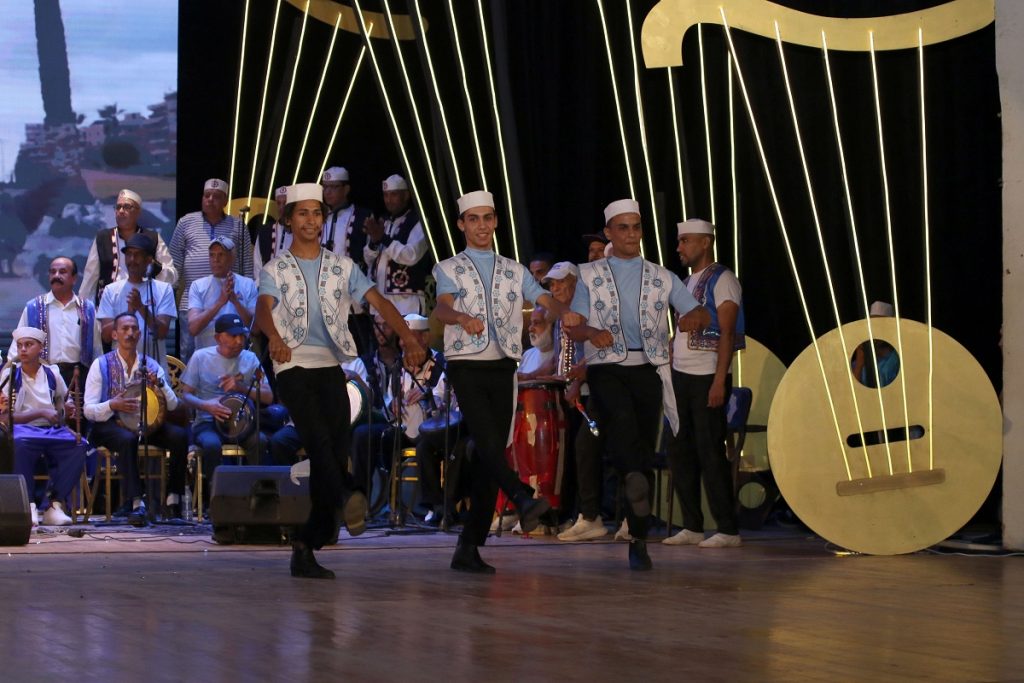
    Absence of simsimiyya icons from the forum

    The selection of three figures from cities along the Suez Canal to be honored was widely welcomed. However, it was also met with criticism from musicians who wanted to honor names that contributed to the development of the instrument. Or at least invite them to attend the meeting.

    Musician Musa Ahmed Musa told Bab Masr – Bahri that he attended the forum without an invitation.

    The Ministry of Culture did not send invitations to musicians and independent bands to attend the meeting. Many prominent figures in the preservation and development of the simsimiyya heritage did not attend the meeting. We are not asking for recognition, just an invitation to attend.

    He added: “The value of the simsimiyya lies in its presence among the people in the streets and neighborhoods. But when you take it and put it in a display case in the middle of a theater, the instrument loses its real audience.”

    Mohamed Mida agreed, saying: “If we want to preserve the instrument, we must keep it open and accessible to people as it was in the past in the streets, cafes, parks, and festivals during the Sham El-Nessim, strawberry, and mango seasons.

    But when the simsimiyya becomes just a theatrical instrument, it loses much of its spontaneous audience.”

    Official interest in registering Egyptian heritage

    Dr. Ahmed Fouad Hanno, Minister of Culture, said after the forum: “There is interest in registering elements of Egyptian heritage and culture. We now have 11 elements registered on the Representative List of the Intangible Cultural Heritage of Humanity. We are seeking to register other elements.”

    He added: “Our presence in Ismailia and the Suez Canal region is a celebration of a national achievement of which we are all proud. It is the registration of the simsimiyya instrument on UNESCO’s Intangible Cultural Heritage lists as an authentic symbol of Egyptian identity. It remains a living voice of the people of the Canal, a witness to a long history of struggle and resilience, a companion to victories, and a keeper of the memory of the place.”
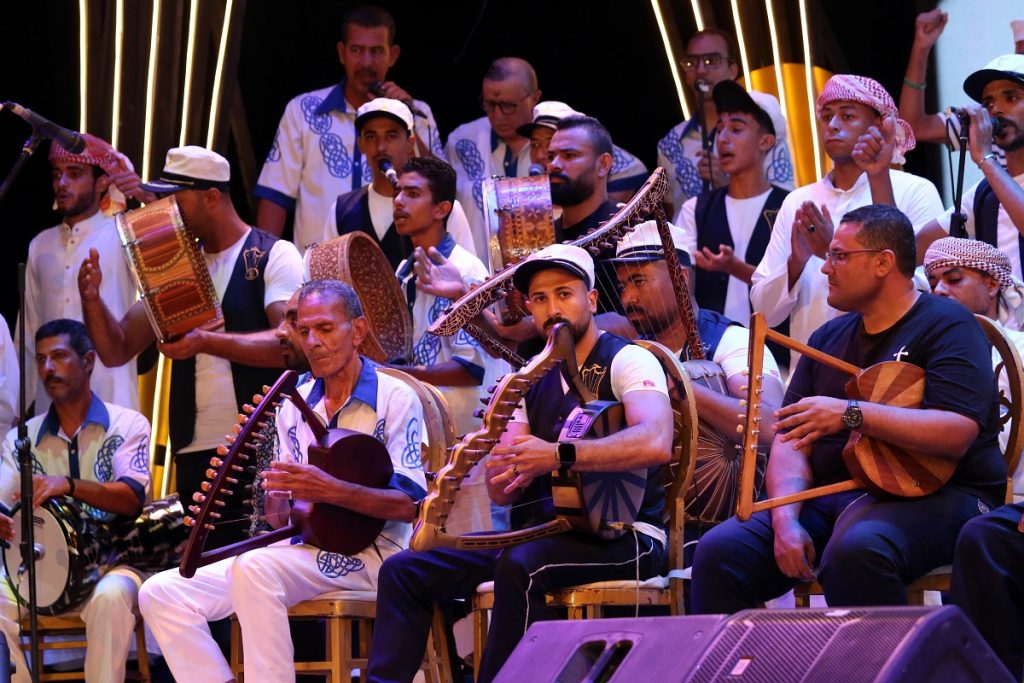
    Simsimiyya gathering in Ismailia Photo Mohamed Awadd
    Simsimiyya gathering in Ismailia Photo Mohamed Awadd
    Various artistic performances

    The main concert featured nine artistic groups: The Ismailia Folk Arts Troupe, the Al-Turaqia Troupe, the Suez Folk Instruments Troupe, the Al-Sahaba Al-Bursida Troupe, the Suez Folk Instruments Troupe, the Suez Youth Troupe, the Ismailia Folk Instruments Troupe, the Al-Waziri Troupe in Ismailia, and the Suez Folk Arts Troupe.

    These groups presented performances that were interconnected in terms of content but independent in terms of performance, showcasing the richness of the simsimiyya heritage. Dr. Mohamed Shabana, professor of folk literature at the Academy of Arts and member of the UNESCO Simsimiyya Registration Committee, told Bab Masr – Bahri that simsimiyya reached the canal cities with the digging of the canal.
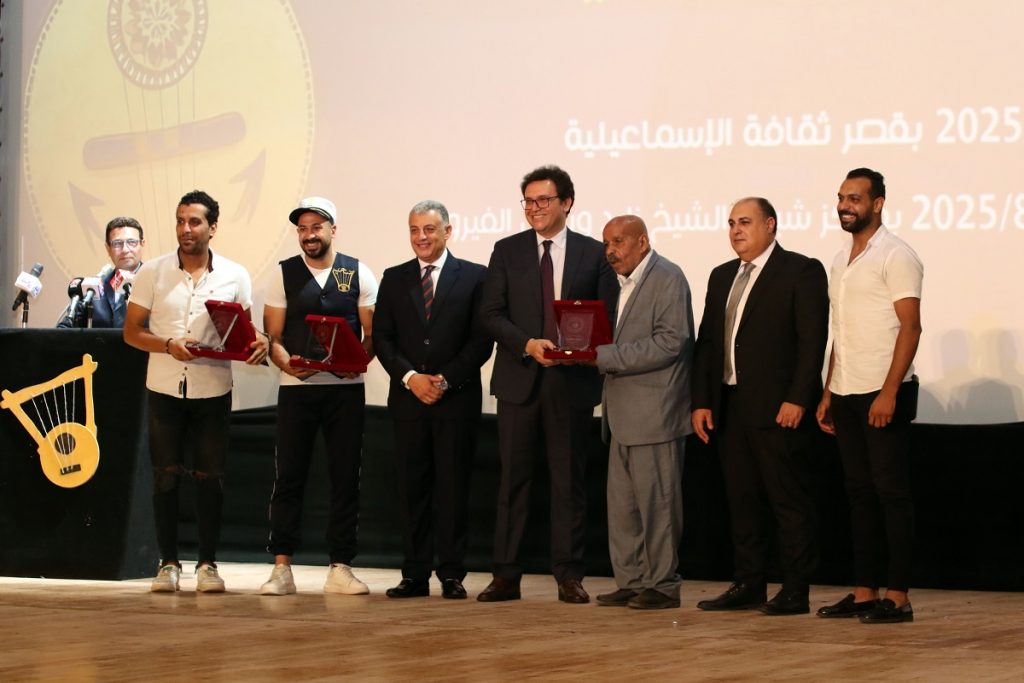
    Simsimiyya gathering in Ismailia Photo Mohamed Awaddd
    Simsimiyya gathering in Ismailia Photo Mohamed Awaddd

    It is also found in the cities of the Red Sea basin, because it was linked to trade and shipping. Sailors traveled with their music, which contributed to its spread in ancient times. But what distinguishes it in Egyptian heritage is its unique character. Each city plays simsimiyya in its own way and with its own spirit.

    He added: “Today, thanks to the expansion of cultural palaces, we find simsimiyya in cities other than those where it originated. You can find examples of its songs in Ras Gharib, Matrouh, Nubia, and Dakahlia, in addition to the canal cities for which it is famous.”

    Share. Facebook Twitter Pinterest LinkedIn Tumblr Email
    Previous ArticleAl-Abbasi Street in Mansoura: The story of a market between two minarets
    Next Article How do countries preserve their historic buildings? America’s experience in relocating a railway building
    Mohamed Awad

    Related Posts

    The Woven Skeleton: The Palm Frond Artisans of Kafr Al-Battikh Fend Off a Plastic Tide

    2026-05-14

    The Damanhur Opera House: A Sovereign Union of Italian Elegance and Islamic Heritage

    2026-05-11

    The Silent Outposts of Port Said: Ruins Beyond the Reach of Visitors

    2026-05-10

    Comments are closed.

    Recent Posts
    • The Woven Skeleton: The Palm Frond Artisans of Kafr Al-Battikh Fend Off a Plastic Tide
    • The Sanctuary of Saint Bishoy: A Living Ledger of Egyptian Monasticism
    • Shadows Over the Nile: Concrete Construction Spark Criticism Beneath the Temple of Kalabsha
    • The Damanhur Opera House: A Sovereign Union of Italian Elegance and Islamic Heritage
    • The Silent Outposts of Port Said: Ruins Beyond the Reach of Visitors
    Recent Comments
    • Binance美国注册 on An exhibition in Paris reimagines Cleopatra, far from Western narratives
    • binance "oppna konto on An exhibition in Paris reimagines Cleopatra, far from Western narratives
    • código de referencia de Binance on Art exhibition documents the first Egyptian Scout postage stamp at the National Museum of Civilization
    • Binance账户创建 on Between popular religiosity and the benevolence of the Quran, how can beauty be reconnected with “Sayyida Zeinab”?
    • phoenix game on Theater never dies… Mansoura saves its heritage and restores it as an opera house
    About Us
    About Us

    Your source for the lifestyle news. This demo is crafted specifically to exhibit the use of the theme as a lifestyle site. Visit our main page for more demos.

    We're accepting new partnerships right now.

    Email Us: info@example.com
    Contact: +1-320-0123-451

    Facebook X (Twitter) Pinterest YouTube WhatsApp
    Our Picks

    The Woven Skeleton: The Palm Frond Artisans of Kafr Al-Battikh Fend Off a Plastic Tide

    2026-05-14

    The Sanctuary of Saint Bishoy: A Living Ledger of Egyptian Monasticism

    2026-05-13

    Shadows Over the Nile: Concrete Construction Spark Criticism Beneath the Temple of Kalabsha

    2026-05-13
    Most Popular

    Shadows Over the Nile: Concrete Construction Spark Criticism Beneath the Temple of Kalabsha

    2026-05-135 Views

    The Sanctuary of Saint Bishoy: A Living Ledger of Egyptian Monasticism

    2026-05-132 Views

    The Healing Arteries of Dakhla: Harnessing the Geothermal Riches of the New Valley

    2026-05-062 Views
    Demo
    Latest Posts

    The Woven Skeleton: The Palm Frond Artisans of Kafr Al-Battikh Fend Off a Plastic Tide

    2026-05-140 Views

    The Sanctuary of Saint Bishoy: A Living Ledger of Egyptian Monasticism

    2026-05-132 Views

    Shadows Over the Nile: Concrete Construction Spark Criticism Beneath the Temple of Kalabsha

    2026-05-135 Views

    The Damanhur Opera House: A Sovereign Union of Italian Elegance and Islamic Heritage

    2026-05-111 Views
    Stay In Touch
    • Facebook
    • Twitter
    • Pinterest
    • Instagram
    • YouTube
    • Vimeo
    Don't Miss

    Shadows Over the Nile: Concrete Construction Spark Criticism Beneath the Temple of Kalabsha

    By Bab Masr2026-05-13

    A controversy erupts in Aswan as new concrete structures at the Temple of Kalabsha spark…

    The Sanctuary of Saint Bishoy: A Living Ledger of Egyptian Monasticism

    2026-05-13

    The Healing Arteries of Dakhla: Harnessing the Geothermal Riches of the New Valley

    2026-05-06

    Subscribe to Updates

    Get the latest creative news from SmartMag about art & design.

    Demo
    Demo
    Latest Posts

    The Woven Skeleton: The Palm Frond Artisans of Kafr Al-Battikh Fend Off a Plastic Tide

    2026-05-140 Views

    The Sanctuary of Saint Bishoy: A Living Ledger of Egyptian Monasticism

    2026-05-132 Views

    Shadows Over the Nile: Concrete Construction Spark Criticism Beneath the Temple of Kalabsha

    2026-05-135 Views

    The Damanhur Opera House: A Sovereign Union of Italian Elegance and Islamic Heritage

    2026-05-111 Views
    Stay In Touch
    • Facebook
    • Twitter
    • Pinterest
    • Instagram
    • YouTube
    • Vimeo
    Don't Miss

    Shadows Over the Nile: Concrete Construction Spark Criticism Beneath the Temple of Kalabsha

    By Bab Masr2026-05-13

    A controversy erupts in Aswan as new concrete structures at the Temple of Kalabsha spark…

    The Sanctuary of Saint Bishoy: A Living Ledger of Egyptian Monasticism

    2026-05-13

    The Healing Arteries of Dakhla: Harnessing the Geothermal Riches of the New Valley

    2026-05-06

    Subscribe to Updates

    Get the latest creative news from SmartMag about art & design.

    Demo
    About Us
    About Us

    Your source for the lifestyle news. This demo is crafted specifically to exhibit the use of the theme as a lifestyle site. Visit our main page for more demos.

    We're accepting new partnerships right now.

    Email Us: info@example.com
    Contact: +1-320-0123-451

    Facebook X (Twitter) Pinterest YouTube WhatsApp
    Our Picks

    The Woven Skeleton: The Palm Frond Artisans of Kafr Al-Battikh Fend Off a Plastic Tide

    2026-05-14

    The Sanctuary of Saint Bishoy: A Living Ledger of Egyptian Monasticism

    2026-05-13

    Shadows Over the Nile: Concrete Construction Spark Criticism Beneath the Temple of Kalabsha

    2026-05-13
    Most Popular

    Shadows Over the Nile: Concrete Construction Spark Criticism Beneath the Temple of Kalabsha

    2026-05-135 Views

    The Sanctuary of Saint Bishoy: A Living Ledger of Egyptian Monasticism

    2026-05-132 Views

    The Healing Arteries of Dakhla: Harnessing the Geothermal Riches of the New Valley

    2026-05-062 Views
    © 2026 ThemeSphere. Designed by ThemeSphere.

    Type above and press Enter to search. Press Esc to cancel.