



Close Menu
باب مصرباب مصر

    Subscribe to Updates

    Get the latest creative news from FooBar about art, design and business.

    What's Hot

    The Woven Skeleton: The Palm Frond Artisans of Kafr Al-Battikh Fend Off a Plastic Tide

    2026-05-14

    The Sanctuary of Saint Bishoy: A Living Ledger of Egyptian Monasticism

    2026-05-13

    Shadows Over the Nile: Concrete Construction Spark Criticism Beneath the Temple of Kalabsha

    2026-05-13
    Facebook X (Twitter) Instagram
    Facebook X (Twitter) Instagram YouTube LinkedIn
    باب مصرباب مصر
    Contact US
    باب مصرباب مصر
    Home»Uncategorized»Job of the Sea: The Odyssey of Fawzy al-Dabbousi from British Camps to the High Seas
    Uncategorized

    Job of the Sea: The Odyssey of Fawzy al-Dabbousi from British Camps to the High Seas

    Bab MasrBy Bab Masr2026-04-26Updated:2026-05-20No Comments6 Mins Read0 Views
    Facebook Twitter Pinterest LinkedIn Tumblr Email
    1492186218 641 234625 dsc 0049 scaled
    1492186218 641 234625 dsc 0049 scaled
    Share
    Facebook Twitter LinkedIn Pinterest WhatsApp Email

    From the British military camps of the 1940s to the historic reopening of the Suez Canal, Fawzy al-Dabbousi known as the ‘Job of the Sea’ recounts a life defined by resilience, linguistic mastery, and an eternal bond with the water. A lyrical journey through Egypt’s maritime history and the philosophy of a man who found his soul on the waves.

    By Osama Kamal

    At the water’s edge, where the salt air bites and the horizon stretches into infinity, one encounters the true children of the sea. It grants them a spark of its own resilience, a portion of its eternal renewal, while the sun gifts them an unquenchable thirst to draw breath until the very last gasp. What first commanded my attention was the moniker bestowed upon him: “Ayoub” (Job). It is a name earned through a profound, weathering patience and a fierce grip on life, despite the heavy decades etched into his features and resting upon his weary shoulders.

    From the Cruelty of Kin to the British “Camp”

    Born in 1934, Fawzy Yassin al-Dabbousi carries his father’s name with a towering sense of pride, insisting on its inclusion at every turn. This devotion remains striking, considering he fled his family home in Ismailia as a mere child in 1944. At the age of ten, he sought sanctuary from the seasonal cruelties of a stepmother, venturing into the world without the armor of a formal education. His only brush with organized schooling lasted but a single week within the walls of a Kuttab (a traditional school for Quranic memorization).

    From the tenderest dawn of his youth, he labored as a waiter within the British military installations, or what Egyptians then dubbed the “English Camp.” These outposts flanked the three Canal Cities: Port Said, Ismailia, and Suez. Their presence had solidified following the 1936 treaty between the Egyptian and British governments an agreement later torn asunder in 1951 by the Wafdist leader Mustafa al-Nahhas Pasha, following British stalling on withdrawal after the Second World War and the 1948 occupation of Palestine.
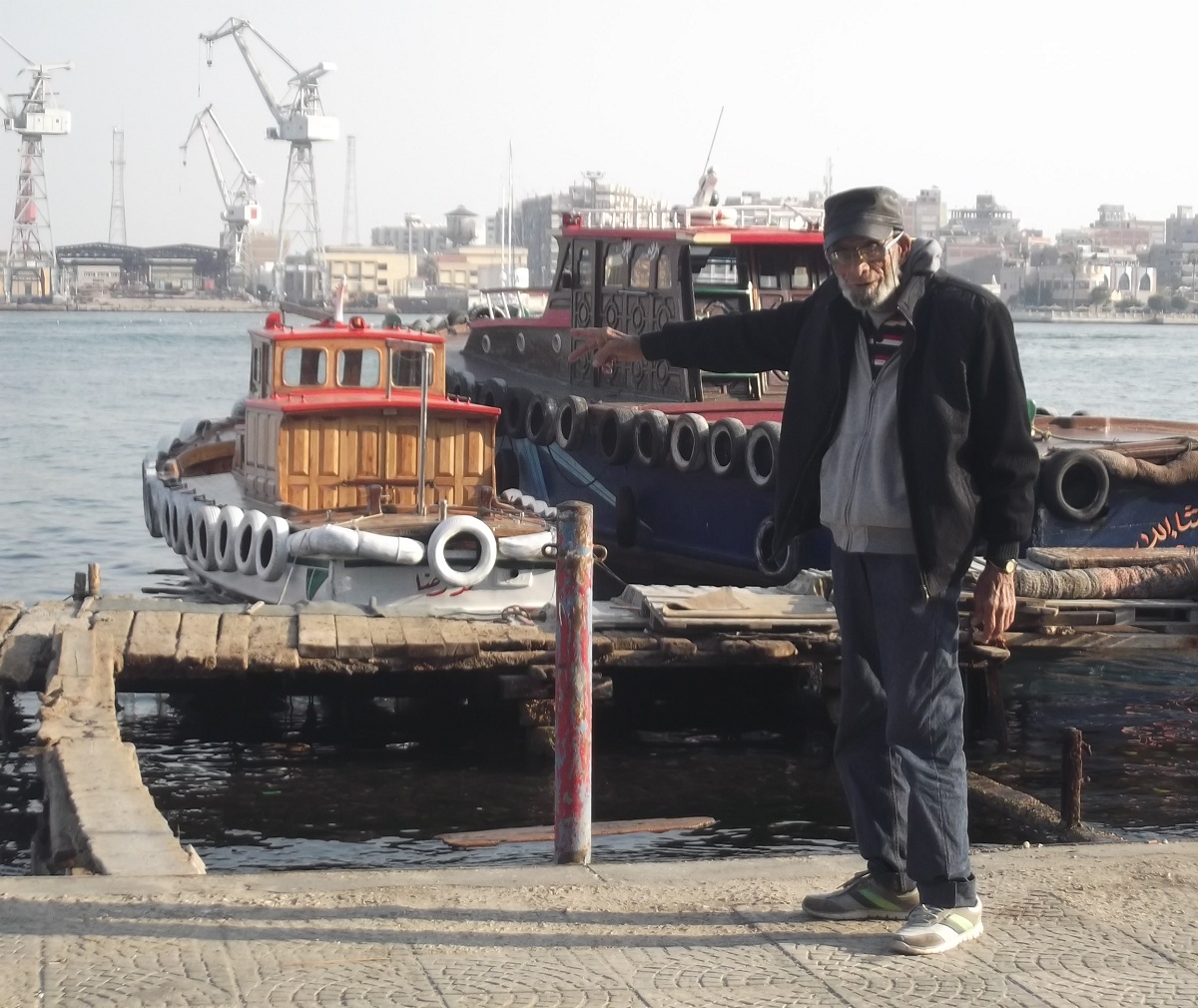
    أيوب البحر تصوير أسامة كمال 3
    Job of the Sea – Photo: Osama Kamal

    Seventy Piastres: The Price of Sovereignty

    Al-Dabbousi revisits those years through the wide, observant eyes of his childhood self. “I began my labor very young within the English camps,” he recalls. “First, I served in the barracks of the British female recruits. Once I had garnered sufficient expertise, they transferred me to the men’s camp, which occupied the site of what is now the Al-Jalaa camp in Ismailia. After I fled to Port Said, I found work in a camp in the Port Fouad district and made my home there. My monthly salary was seventy piastres, a sum that would command seven thousand pounds in today’s currency. It was more than enough for a child of my years who had resolved to stand on his own feet so early in life.”

    He continues: “Every item within the camp’s canteen arrived directly from the motherland, Great Britain. Foodstuffs, garments, perfumes, periodicals, cigarettes, and stationery. I was tasked with the distribution and sale of these goods to the soldiers.”

    An Initiation into the Blue

    Reflecting on his sense of belonging during that era, al-Dabbousi notes: “I was small, and I did not fully grasp the machinations swirling around me, particularly as I had been denied the education my peers received. I departed the camps in the early fifties after the treaty was abolished. I even took part in a few modest resistance fighter operations against the British occupation.”

    He continues his narrative: “I drifted through various trades thereafter, leaning on the skills I honed with the English, most notably my command of their tongue. In 1956, I joined the Al-Ribat and Lights Company as a Rais Bahari (Boatswain). It was there that my true voyage with the sea commenced.” He describes the Great Blue with poetic reverence: “The sea is a mirror to life fickle, multifaceted, and vibrant with shifting colors. It is not merely one existence, but a multitude of lives lived at once.”
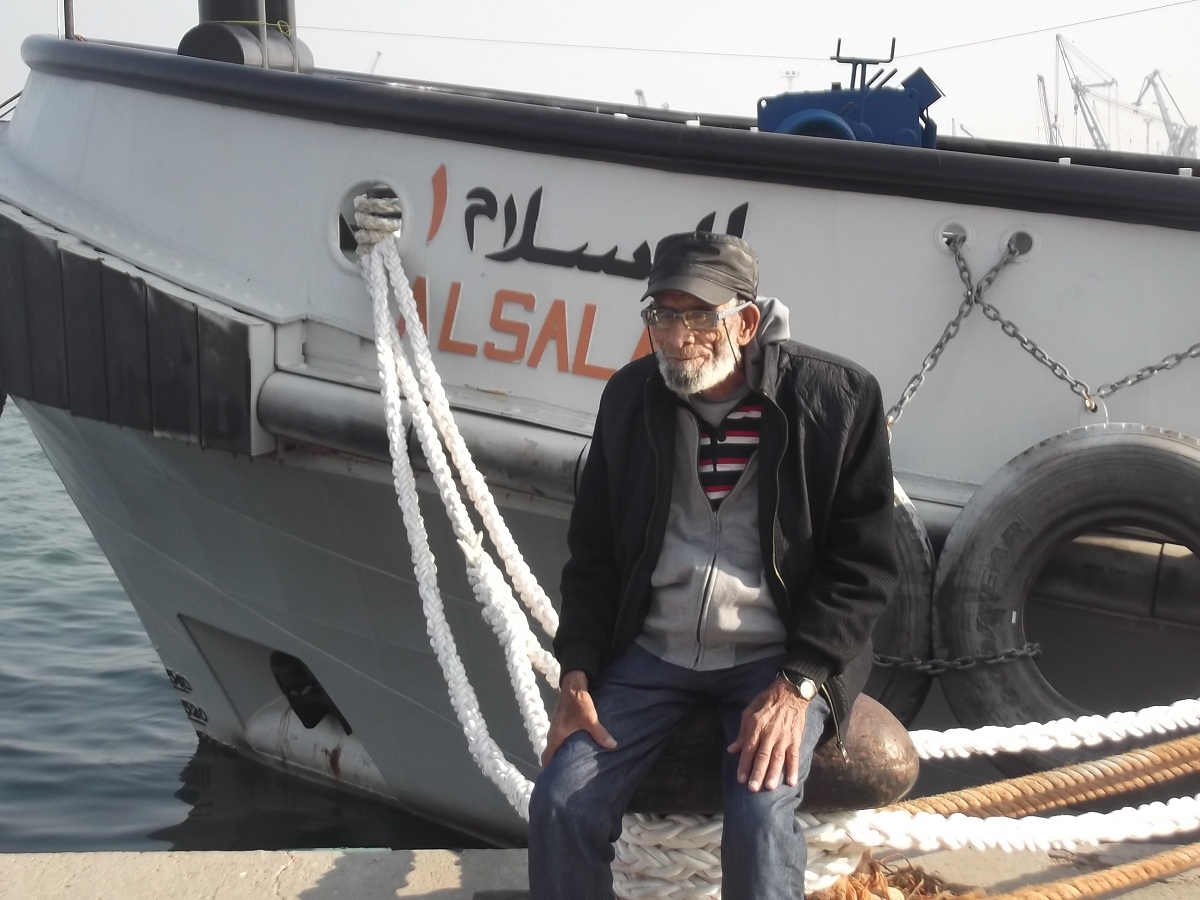
    ase
    Fawzy al-Dabbousi, the “Job of the Sea.” – Photo: Osama Kamal

    Sadat and the Echoes of the Crossing

    With a palpable yearning, al-Dabbousi says: “I shall never forget the moment I stood upon the ship Syria, trailing President Anwar Sadat during his inaugural crossing after the Suez Canal’s reopening in 1975. The festivities commenced with the handover of the Canal from military administration, represented by the former Minister of Defense Mohamed Abdel Ghani el-Gamasy, to civil authority under Engineer Mashhour Ahmed Mashhour.”

    He paints the scene: “Sadat boarded the destroyer October 6 to set sail. Minesweepers cleared his path, while behind him trailed the yacht El Horriya, the very vessel that participated in the Canal’s original opening in 1869. Then came the American ship Little Rock, which assisted in purging the waters of mines and wreckage, alongside a fleet of Egyptian vessels. It was an unforgettable tableau.” He also recalls the French ship Georgian, which foundered in the Canal in 1980 and remained trapped for sixteen days until a Dutch tugboat hauled it free. “I spent that entire duration on board, befriending the crew. Those bonds of friendship endure to this day.”

    The “Bambouti” and the Gift of Tongues

    When al-Dabbousi retired in 1994, he plummeted into a profound melancholy. It was the sea that eventually summoned him back to vitality. “I decided to become a Bambouti (a traditional canal trader selling goods to passing ships). I secured the necessary permits and carved out a niche dealing with British and American vessels.”

    His linguistic repertoire expanded with his travels: “I mastered several languages alongside English, including Hindi, Greek, Spanish, and Danish. I even grasped the fundamentals of Japanese and Chinese.” He adds: “I have been tethered to the English since my youth; they are the sovereigns of the sea. It was they who instilled in me a reverence for time and the sanctity of labor. Similarly, I hold a deep affection for the Japanese for their refined manners and their unwavering devotion to their craft.”

    A Philosophy Anchored in the Deep

    Al-Dabbousi concludes his tale with the wisdom of a man who has watched the world pass by from the deck of a ship. “Vessels are not merely modes of transport; they are the cultures of nations traversing the water. In the old days, there was room to cultivate friendships with the sailors. Now, everything moves with a frantic haste.”

    He adds, his voice dropping to a serene register: “I am aware that my days are numbered, but I leave behind six children. I have taught them all the value of labor until the final hour.”

    Then, he offers a smile, both weary and bright: “Life is more beautiful than we imagine, and death is closer than we think.”

    British camps cultural heritage Fawzy al-Dabbousi maritime legacy sailor stories suez canal
    Share. Facebook Twitter Pinterest LinkedIn Tumblr Email
    Previous ArticleDigital Echoes of the Rails: A Virtual Resurrection for Alexandria’s Vanished Tramway
    Next Article Culture at the Frontier: The ‘Confrontation and Wandering’ Project Concludes its Sixth Journey in the New Valley
    Bab Masr

    Related Posts

    The Woven Skeleton: The Palm Frond Artisans of Kafr Al-Battikh Fend Off a Plastic Tide

    2026-05-14

    The Damanhur Opera House: A Sovereign Union of Italian Elegance and Islamic Heritage

    2026-05-11

    The Silent Outposts of Port Said: Ruins Beyond the Reach of Visitors

    2026-05-10

    Comments are closed.

    Recent Posts
    • The Woven Skeleton: The Palm Frond Artisans of Kafr Al-Battikh Fend Off a Plastic Tide
    • The Sanctuary of Saint Bishoy: A Living Ledger of Egyptian Monasticism
    • Shadows Over the Nile: Concrete Construction Spark Criticism Beneath the Temple of Kalabsha
    • The Damanhur Opera House: A Sovereign Union of Italian Elegance and Islamic Heritage
    • The Silent Outposts of Port Said: Ruins Beyond the Reach of Visitors
    Recent Comments
    • Binance美国注册 on An exhibition in Paris reimagines Cleopatra, far from Western narratives
    • binance "oppna konto on An exhibition in Paris reimagines Cleopatra, far from Western narratives
    • código de referencia de Binance on Art exhibition documents the first Egyptian Scout postage stamp at the National Museum of Civilization
    • Binance账户创建 on Between popular religiosity and the benevolence of the Quran, how can beauty be reconnected with “Sayyida Zeinab”?
    • phoenix game on Theater never dies… Mansoura saves its heritage and restores it as an opera house
    About Us
    About Us

    Your source for the lifestyle news. This demo is crafted specifically to exhibit the use of the theme as a lifestyle site. Visit our main page for more demos.

    We're accepting new partnerships right now.

    Email Us: info@example.com
    Contact: +1-320-0123-451

    Facebook X (Twitter) Pinterest YouTube WhatsApp
    Our Picks

    The Woven Skeleton: The Palm Frond Artisans of Kafr Al-Battikh Fend Off a Plastic Tide

    2026-05-14

    The Sanctuary of Saint Bishoy: A Living Ledger of Egyptian Monasticism

    2026-05-13

    Shadows Over the Nile: Concrete Construction Spark Criticism Beneath the Temple of Kalabsha

    2026-05-13
    Most Popular

    Shadows Over the Nile: Concrete Construction Spark Criticism Beneath the Temple of Kalabsha

    2026-05-135 Views

    The Sanctuary of Saint Bishoy: A Living Ledger of Egyptian Monasticism

    2026-05-132 Views

    Scientific trip to explore Upper Egypt temples

    2026-03-062 Views
    Demo
    Latest Posts

    The Woven Skeleton: The Palm Frond Artisans of Kafr Al-Battikh Fend Off a Plastic Tide

    2026-05-140 Views

    The Sanctuary of Saint Bishoy: A Living Ledger of Egyptian Monasticism

    2026-05-132 Views

    Shadows Over the Nile: Concrete Construction Spark Criticism Beneath the Temple of Kalabsha

    2026-05-135 Views

    The Damanhur Opera House: A Sovereign Union of Italian Elegance and Islamic Heritage

    2026-05-111 Views
    Stay In Touch
    • Facebook
    • Twitter
    • Pinterest
    • Instagram
    • YouTube
    • Vimeo
    Don't Miss

    Shadows Over the Nile: Concrete Construction Spark Criticism Beneath the Temple of Kalabsha

    By Bab Masr2026-05-13

    A controversy erupts in Aswan as new concrete structures at the Temple of Kalabsha spark…

    The Sanctuary of Saint Bishoy: A Living Ledger of Egyptian Monasticism

    2026-05-13

    Scientific trip to explore Upper Egypt temples

    2026-03-06

    Subscribe to Updates

    Get the latest creative news from SmartMag about art & design.

    Demo
    Demo
    Latest Posts

    The Woven Skeleton: The Palm Frond Artisans of Kafr Al-Battikh Fend Off a Plastic Tide

    2026-05-140 Views

    The Sanctuary of Saint Bishoy: A Living Ledger of Egyptian Monasticism

    2026-05-132 Views

    Shadows Over the Nile: Concrete Construction Spark Criticism Beneath the Temple of Kalabsha

    2026-05-135 Views

    The Damanhur Opera House: A Sovereign Union of Italian Elegance and Islamic Heritage

    2026-05-111 Views
    Stay In Touch
    • Facebook
    • Twitter
    • Pinterest
    • Instagram
    • YouTube
    • Vimeo
    Don't Miss

    Shadows Over the Nile: Concrete Construction Spark Criticism Beneath the Temple of Kalabsha

    By Bab Masr2026-05-13

    A controversy erupts in Aswan as new concrete structures at the Temple of Kalabsha spark…

    The Sanctuary of Saint Bishoy: A Living Ledger of Egyptian Monasticism

    2026-05-13

    Scientific trip to explore Upper Egypt temples

    2026-03-06

    Subscribe to Updates

    Get the latest creative news from SmartMag about art & design.

    Demo
    About Us
    About Us

    Your source for the lifestyle news. This demo is crafted specifically to exhibit the use of the theme as a lifestyle site. Visit our main page for more demos.

    We're accepting new partnerships right now.

    Email Us: info@example.com
    Contact: +1-320-0123-451

    Facebook X (Twitter) Pinterest YouTube WhatsApp
    Our Picks

    The Woven Skeleton: The Palm Frond Artisans of Kafr Al-Battikh Fend Off a Plastic Tide

    2026-05-14

    The Sanctuary of Saint Bishoy: A Living Ledger of Egyptian Monasticism

    2026-05-13

    Shadows Over the Nile: Concrete Construction Spark Criticism Beneath the Temple of Kalabsha

    2026-05-13
    Most Popular

    Shadows Over the Nile: Concrete Construction Spark Criticism Beneath the Temple of Kalabsha

    2026-05-135 Views

    The Sanctuary of Saint Bishoy: A Living Ledger of Egyptian Monasticism

    2026-05-132 Views

    Scientific trip to explore Upper Egypt temples

    2026-03-062 Views
    © 2026 ThemeSphere. Designed by ThemeSphere.

    Type above and press Enter to search. Press Esc to cancel.