



Close Menu
باب مصرباب مصر

    Subscribe to Updates

    Get the latest creative news from FooBar about art, design and business.

    What's Hot

    The Woven Skeleton: The Palm Frond Artisans of Kafr Al-Battikh Fend Off a Plastic Tide

    2026-05-14

    The Sanctuary of Saint Bishoy: A Living Ledger of Egyptian Monasticism

    2026-05-13

    Shadows Over the Nile: Concrete Construction Spark Criticism Beneath the Temple of Kalabsha

    2026-05-13
    Facebook X (Twitter) Instagram
    Facebook X (Twitter) Instagram YouTube LinkedIn
    باب مصرباب مصر
    Contact US
    باب مصرباب مصر
    Home»Greater Cairo»Of Salt and Stone: The Ascetic Sustenance of Coptic Lent
    Greater Cairo

    Of Salt and Stone: The Ascetic Sustenance of Coptic Lent

    Bab MasrBy Bab Masr2026-04-07Updated:2026-05-20No Comments5 Mins Read0 Views
    Facebook Twitter Pinterest LinkedIn Tumblr Email
    1491678342 212 149269 17634779 1905400643005148 5296373598002064884 n
    1491678342 212 149269 17634779 1905400643005148 5296373598002064884 n
    Share
    Facebook Twitter LinkedIn Pinterest WhatsApp Email

    Exploring the deep-seated traditions of the Coptic Holy Week, this feature story traces the history of Dukkah and Aish Nashif from the monastic rituals of Upper Egypt to their Pharaonic roots. Discover how a simple meal of toasted sesame and sun-dried bread serves as a powerful symbol of asceticism, endurance, and the “cultural transmutation” of Egyptian culinary heritage.

    By Amany Khairy

    Dukkah (a traditional blend of toasted sesame and spices) is a relic of culinary heritage, a flavour known to Egyptians since antiquity. Crafted from finely ground sesame, the dish has, over the centuries, found its primary sanctuary in the provinces of Upper Egypt, where it maintains a more robust presence than in the north. Today, it stands as the foundational meal for Coptic Christians during their periods of “ascetic fasting.” Paired with aish nashif (hard, sun-dried bread), it serves as a profound culinary expression of austerity and mourning during Holy Week, the solemn lead-up to the glorious Feast of the Resurrection.

    Dukkah And Dry Bread

    Thabet Zaki begins by reflecting on a lifelong devotion to this ritual, noting that he has broken his fast with sesame-laden dukkah and dried bread for as long as he can remember. He observes that while some prefer their dukkah with only the lightest dusting of spices, others opt for legumes like fava beans. For many, this remains their sole meal of the day during the fast, a practice rooted in monasticism and a spirit of penance as they contemplate the Passion of Christ. It is a tradition once strictly observed by the desert monks of old, yet it thrives in the modern home.

    “The fast intensifies from the Monday following Palm Sunday until Great Friday,” Zaki explains. “During this final week, observers abstain from all food from noon until nine or even eleven at night, depending entirely on an individual’s physical endurance.”

    Irene Youssef, a homemaker, describes this ritual as an ancestral inheritance, passed down through generations. She prepares the family’s supply of dukkah shortly before the fast begins, sourcing raw sesame from local grocers or traditional herbalists. She notes, however, that the tradition is not universal among the youth; one of her sons eschews the sesame blend entirely, preferring instead to stick to beans and dried bread—a habit he mirrored from his eldest maternal aunt.
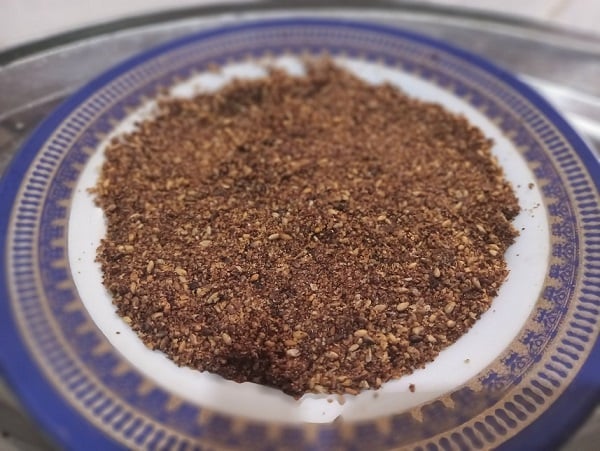
    8147c059 a80c 449e a7d4 f0c107088582
    Preparing the Dukahh.. Photo: Amany Khairy

    The Craft of the Blend

    Mariam Ramzi details the meticulous preparation required to transform simple seeds into a hallowed meal. After purchasing the sesame, she spreads it across a wide tray to pick out impurities, grain by grain. The seeds are then thoroughly washed and left to dry in the Egyptian sun. Once parched, they are toasted until golden, either in a traditional clay oven or a modern range.

    “After toasting, the sesame is pulsed in a blender until it reaches a fine, sandy texture,” Ramzi says. “We add salt and a whisper of cumin and coriander, never so much that the spices eclipse the soul of the sesame. Occasionally, a pinch of chilli is added for a subtle warmth.” This fragrant powder is then sealed in jars, lying in wait for the long hours of the fast.

    Ancient Roots of the Loaf

    Tayeb Gharib, an archaeologist and former director of the Karnak Temples, described that the ancient Egyptian table as a sophisticated mosaic of biodiversity. From legumes and greens to meats and migratory birds, the diet reflected a deep connection to the land across all social strata. Legumes, specifically fava beans, lentils, and chickpeas, were essential for their “interiority” providing a lasting sense of fullness during long days of labour.

    Gharib notes that the ancients were masters of the oven, innovating nearly 40 varieties of bread from wheat, barley, and maize. Among these were the tahaj (a refined white loaf) and the tasha’at (a triangular pastry). Even the modern colloquial term bataw finds its etymological roots in the ancient pataw, a barley bread still baked in rural hamlets. Many of these ancient loaves were adorned with sesame or stuffed with fillings, much like the aish shamsi (sun-leavened sourdough) that remains a staple of Upper Egyptian life today. Scholars frequently argue that Coptic staples like shalwlaw (dried molokhia) and bissara (pureed beans) are, in fact, culinary echoes of the Pharaonic era.
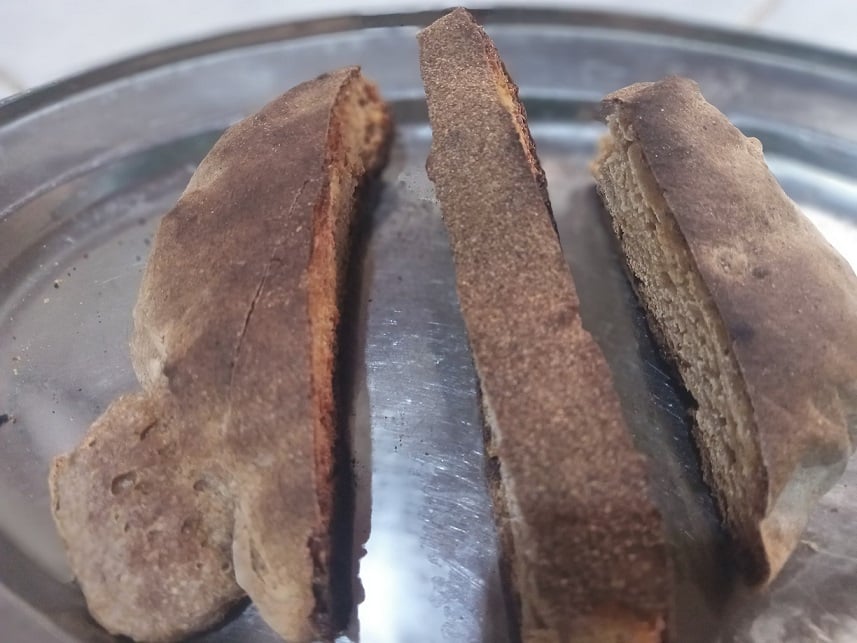
    dba418c4 5d98 428f 898c 2bfc58abf074
    Dried bread.Photo: Amany Khairy

    A Cultural Transmutation

    Dr. Abdelghaffar Wagdi, Director General of Luxor Antiquities, suggests that these culinary customs are a bridge between epochs. The foods associated with modern feasts and fasts most notably the eggs of Easter and the salted fish of Sham el-Nessim possess symbolic weights that have remained largely unchanged for millennia.

    The persistence of these dishes represents a cultural transmutation; while the religious framework giving them meaning has shifted from the Pharaonic to the Christian context, the underlying folk symbols remain anchored in the Egyptian soil.

    Did the Ancients Eat Dukkah?

    Regarding the specific origin of dukkah, Wagdi clarifies that while there is evidence of sesame-based condiments in the New Kingdom, it is difficult to draw a direct line to the modern recipe. Sesame was a vital crop, primarily utilised for its oil or as a topping for breads, though it was less ubiquitous than flaxseed oil. While the “Dukkah” known today isn’t explicitly catalogued as a standalone dish in ancient scrolls, its ingredients have been unearthed in numerous archaeological sites, proving that the foundation of this humble, rhythmic meal has been part of the Egyptian palate for an eternity.

    Aish Nashif Dukkah Egyptian Coptic rituals lent Pharaonic food heritage upper Egypt
    Share. Facebook Twitter Pinterest LinkedIn Tumblr Email
    Previous ArticleNabil Darwish Museum.. The End of a Surreal Scene
    Next Article In the Footsteps of the Holy Family: A Journey Through the Ancient Churches of Minya
    Bab Masr

    Related Posts

    The Sanctuary of Saint Bishoy: A Living Ledger of Egyptian Monasticism

    2026-05-13

    Shadows Over the Nile: Concrete Construction Spark Criticism Beneath the Temple of Kalabsha

    2026-05-13

    The Last Cobblers of Luxor: A Craft Contesting the Modern Tide

    2026-05-10

    Comments are closed.

    Recent Posts
    • The Woven Skeleton: The Palm Frond Artisans of Kafr Al-Battikh Fend Off a Plastic Tide
    • The Sanctuary of Saint Bishoy: A Living Ledger of Egyptian Monasticism
    • Shadows Over the Nile: Concrete Construction Spark Criticism Beneath the Temple of Kalabsha
    • The Damanhur Opera House: A Sovereign Union of Italian Elegance and Islamic Heritage
    • The Silent Outposts of Port Said: Ruins Beyond the Reach of Visitors
    Recent Comments
    • Binance美国注册 on An exhibition in Paris reimagines Cleopatra, far from Western narratives
    • binance "oppna konto on An exhibition in Paris reimagines Cleopatra, far from Western narratives
    • código de referencia de Binance on Art exhibition documents the first Egyptian Scout postage stamp at the National Museum of Civilization
    • Binance账户创建 on Between popular religiosity and the benevolence of the Quran, how can beauty be reconnected with “Sayyida Zeinab”?
    • phoenix game on Theater never dies… Mansoura saves its heritage and restores it as an opera house
    About Us
    About Us

    Your source for the lifestyle news. This demo is crafted specifically to exhibit the use of the theme as a lifestyle site. Visit our main page for more demos.

    We're accepting new partnerships right now.

    Email Us: info@example.com
    Contact: +1-320-0123-451

    Facebook X (Twitter) Pinterest YouTube WhatsApp
    Our Picks

    The Woven Skeleton: The Palm Frond Artisans of Kafr Al-Battikh Fend Off a Plastic Tide

    2026-05-14

    The Sanctuary of Saint Bishoy: A Living Ledger of Egyptian Monasticism

    2026-05-13

    Shadows Over the Nile: Concrete Construction Spark Criticism Beneath the Temple of Kalabsha

    2026-05-13
    Most Popular

    Shadows Over the Nile: Concrete Construction Spark Criticism Beneath the Temple of Kalabsha

    2026-05-135 Views

    The Sanctuary of Saint Bishoy: A Living Ledger of Egyptian Monasticism

    2026-05-132 Views

    The Healing Arteries of Dakhla: Harnessing the Geothermal Riches of the New Valley

    2026-05-062 Views
    Demo
    Latest Posts

    The Woven Skeleton: The Palm Frond Artisans of Kafr Al-Battikh Fend Off a Plastic Tide

    2026-05-140 Views

    The Sanctuary of Saint Bishoy: A Living Ledger of Egyptian Monasticism

    2026-05-132 Views

    Shadows Over the Nile: Concrete Construction Spark Criticism Beneath the Temple of Kalabsha

    2026-05-135 Views

    The Damanhur Opera House: A Sovereign Union of Italian Elegance and Islamic Heritage

    2026-05-111 Views
    Stay In Touch
    • Facebook
    • Twitter
    • Pinterest
    • Instagram
    • YouTube
    • Vimeo
    Don't Miss

    Shadows Over the Nile: Concrete Construction Spark Criticism Beneath the Temple of Kalabsha

    By Bab Masr2026-05-13

    A controversy erupts in Aswan as new concrete structures at the Temple of Kalabsha spark…

    The Sanctuary of Saint Bishoy: A Living Ledger of Egyptian Monasticism

    2026-05-13

    The Healing Arteries of Dakhla: Harnessing the Geothermal Riches of the New Valley

    2026-05-06

    Subscribe to Updates

    Get the latest creative news from SmartMag about art & design.

    Demo
    Demo
    Latest Posts

    The Woven Skeleton: The Palm Frond Artisans of Kafr Al-Battikh Fend Off a Plastic Tide

    2026-05-140 Views

    The Sanctuary of Saint Bishoy: A Living Ledger of Egyptian Monasticism

    2026-05-132 Views

    Shadows Over the Nile: Concrete Construction Spark Criticism Beneath the Temple of Kalabsha

    2026-05-135 Views

    The Damanhur Opera House: A Sovereign Union of Italian Elegance and Islamic Heritage

    2026-05-111 Views
    Stay In Touch
    • Facebook
    • Twitter
    • Pinterest
    • Instagram
    • YouTube
    • Vimeo
    Don't Miss

    Shadows Over the Nile: Concrete Construction Spark Criticism Beneath the Temple of Kalabsha

    By Bab Masr2026-05-13

    A controversy erupts in Aswan as new concrete structures at the Temple of Kalabsha spark…

    The Sanctuary of Saint Bishoy: A Living Ledger of Egyptian Monasticism

    2026-05-13

    The Healing Arteries of Dakhla: Harnessing the Geothermal Riches of the New Valley

    2026-05-06

    Subscribe to Updates

    Get the latest creative news from SmartMag about art & design.

    Demo
    About Us
    About Us

    Your source for the lifestyle news. This demo is crafted specifically to exhibit the use of the theme as a lifestyle site. Visit our main page for more demos.

    We're accepting new partnerships right now.

    Email Us: info@example.com
    Contact: +1-320-0123-451

    Facebook X (Twitter) Pinterest YouTube WhatsApp
    Our Picks

    The Woven Skeleton: The Palm Frond Artisans of Kafr Al-Battikh Fend Off a Plastic Tide

    2026-05-14

    The Sanctuary of Saint Bishoy: A Living Ledger of Egyptian Monasticism

    2026-05-13

    Shadows Over the Nile: Concrete Construction Spark Criticism Beneath the Temple of Kalabsha

    2026-05-13
    Most Popular

    Shadows Over the Nile: Concrete Construction Spark Criticism Beneath the Temple of Kalabsha

    2026-05-135 Views

    The Sanctuary of Saint Bishoy: A Living Ledger of Egyptian Monasticism

    2026-05-132 Views

    The Healing Arteries of Dakhla: Harnessing the Geothermal Riches of the New Valley

    2026-05-062 Views
    © 2026 ThemeSphere. Designed by ThemeSphere.

    Type above and press Enter to search. Press Esc to cancel.