



Close Menu
باب مصرباب مصر

    Subscribe to Updates

    Get the latest creative news from FooBar about art, design and business.

    What's Hot

    The Woven Skeleton: The Palm Frond Artisans of Kafr Al-Battikh Fend Off a Plastic Tide

    2026-05-14

    The Sanctuary of Saint Bishoy: A Living Ledger of Egyptian Monasticism

    2026-05-13

    Shadows Over the Nile: Concrete Construction Spark Criticism Beneath the Temple of Kalabsha

    2026-05-13
    Facebook X (Twitter) Instagram
    Facebook X (Twitter) Instagram YouTube LinkedIn
    باب مصرباب مصر
    Contact US
    باب مصرباب مصر
    Home»Upper Egypt»“Molokhia Night”.. A tradition passed down to celebrate the Prophet’s birthday in Naga al-Aqarba
    Upper Egypt

    “Molokhia Night”.. A tradition passed down to celebrate the Prophet’s birthday in Naga al-Aqarba

    Abo Elhasan Abd ElsattarBy Abo Elhasan Abd Elsattar2025-09-04Updated:2026-05-20No Comments6 Mins Read0 Views
    Facebook Twitter Pinterest LinkedIn Tumblr Email
    Share
    Facebook Twitter LinkedIn Pinterest WhatsApp Email

    There, in southern Luxor, specifically in Naga al-Aqarba, the scene is renewed every year on the night of the Prophet’s birthday, where the locals gather in a unique celebration that differs from any other celebrations in Upper Egypt. Men, women, and children gather on both sides of the roads and in front of houses to eat a meal of “dry molokhia,” which has transformed from a simple food into an annual ritual with special symbolism. This simple, popular meal has become a symbol of joy, togetherness, and blessing, a tradition that has been passed down for more than a hundred years. The people of Al-Naj’a are keen to keep it alive as an integral part of their identity and collective memory.

    A tradition passed down through the generations

    Hajj Abdulrahim al-Jamal, one of the elders of al-Naj’a, says: “We inherited this tradition from our ancestors. Every year on the Prophet’s birthday, they would make molokhia nasha in large pots and distribute the meat with it to everyone. The idea is that every household gets its share and enjoys it with its family, but gathering in the square has a special flavor, bringing us together in love and blessing. As for why they chose dried molokhia specifically, we don’t know, but we found our elders doing this for more than 100 years.”

    He adds that the locals are keen to continue this tradition no matter what the circumstances, considering that molokhia is not just food, but a symbol of social solidarity and communication between generations, as grandchildren learn the secret of the ritual from their grandparents, keeping the tradition alive in everyone’s hearts.
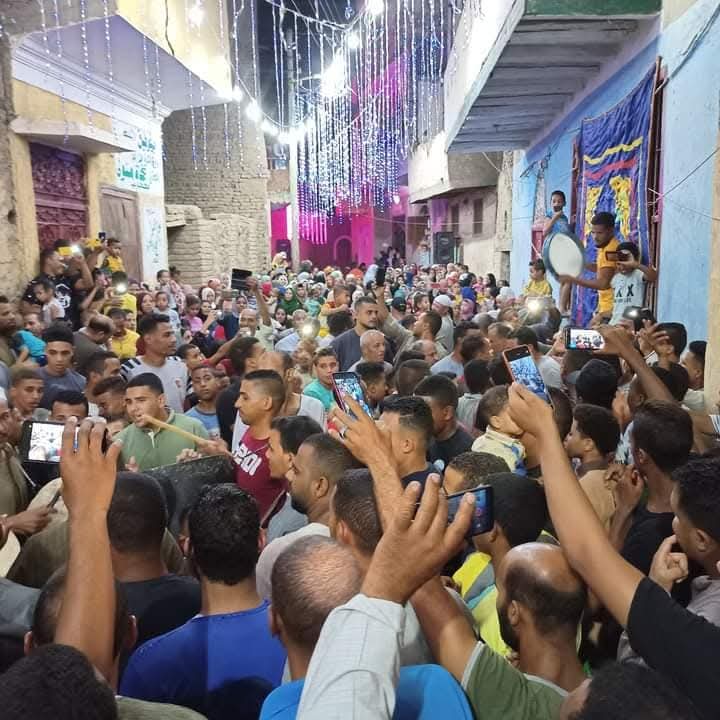
    A scene from the celebrations ... Photo by Abu al-Hasan Abd al-Sattar
    A scene from the celebrations … Photo by Abu al-Hasan Abd al-Sattar
    Setting the table

    Chef Mahmoud Metwally, the banquet chef, says that preparations begin early in the morning as the final night approaches. The young men of the village slaughter one or more calves, then set about cleaning and preparing the dried molokhia, washing the rice, and preparing the cumin. The huge pots, which can number up to ten or twelve, are placed in the diwan or the village’s event hall, where the aroma of molokhia mixed with meat attracts locals and guests alike.

    Sayed Hassani, one of the participants in the cooking, emphasizes: “Molokhia here is not just a dish, it is a celebration. We prepare it in large quantities so that there is enough for everyone, and we make sure that it tastes the same as we have always known it to taste. We consider ourselves servants to our families and guests on this night. Why did they choose molokhia in particular? We don’t know, but we found our ancestors making it a long time ago.”

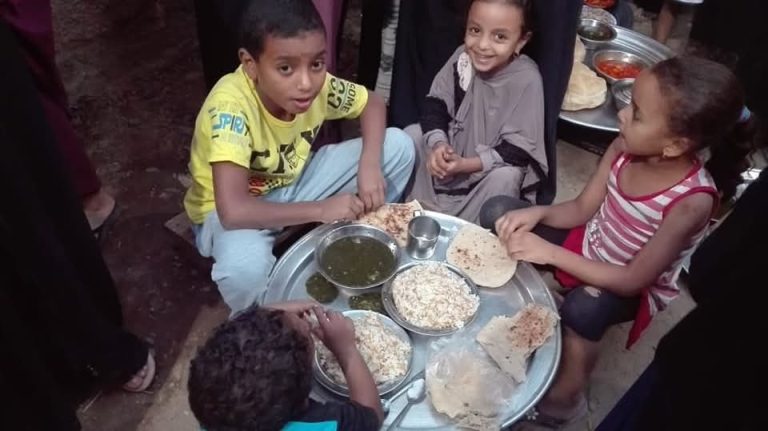
    As the sun sets, the most beautiful scene begins: men, women, and children come out of their homes carrying plates and cups, heading to the square where the giant pots are. They sit on the ground in a spontaneous, joyful gathering, waiting to be served molokhia and meat.

    Joy and generosity

    Sahar Farid Metwally, one of the village women, says: “The children look forward to it all year long. Tonight is a special occasion. We take the molokhia home and eat it together, but first we have to share in the square and sit among the people.”

    The scene is not limited to the children of the village, but also includes guests from neighboring villages. The locals consider the “molokhia feast” to be open to all visitors, reflecting the generosity of the people of Upper Egypt and their tradition of honoring guests.
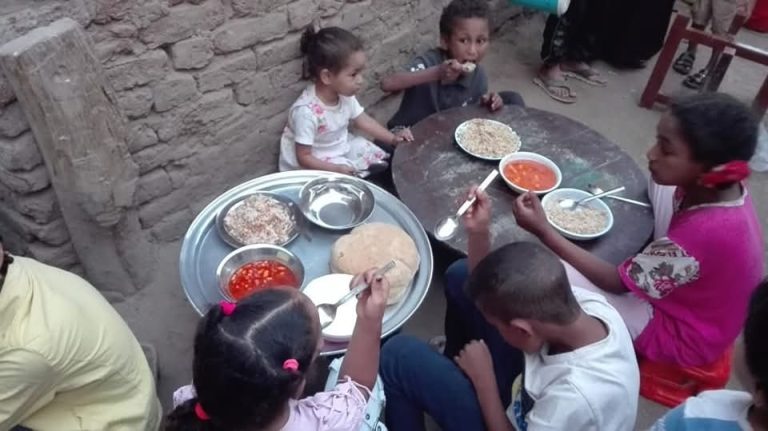
    Mouloukhiya Night ... Photo by Abu al-Hasan Abd al-Sattar
    Mouloukhiya Night … Photo by Abu al-Hasan Abd al-Sattar
    Mouloukhiya Night ... Photo by Abu al-Hasan Abd al-Sattar1
    Mouloukhiya Night … Photo by Abu al-Hasan Abd al-Sattar1
    After the meal… praise and remembrance

    After the meals have been distributed and the locals have returned to their homes, circles of religious chanting and singing begin in the square, with the singers reciting poems in praise of the Prophet. Young and old gather in circles, their voices rising in supplication, while the ululations of women can be heard in the distance.

    Young man Faraj Muhammad Ahmad says, “We consider this night to be more than just eating and drinking; it is a spiritual night. After we distribute the molokhia and return the food to our homes, we sit and listen to the madahin and participate in the remembrance. The atmosphere is full of light and blessings.”

    A social and spiritual ritual

    The molokhia feast in Naga al-Aqarba is a unique example of the connection between food and religious and social rituals in Upper Egypt. Molokhia is no longer just a dish.

    It has become a symbol of a collective celebration that blends the spiritual and the social. This tradition reflects the cohesion of the local community and its ability to preserve its customs amid the changes of time.

    A celebration that defies time

    Despite the passing of years and changing lifestyles, the people of Naga al-Aqarba still adhere to this custom. Every year, on the anniversary of the Prophet’s birthday, the scene is renewed as if time had stopped at the moment of the first feast held by their ancestors.

    Hajj Jaber Ibrahim Muhammad says, “Molokhia reminds us of our origins and our deceased relatives. We are determined to teach our children this tradition so that it will continue after us. It’s not just a dish… it’s the blessing of the Prophet.”
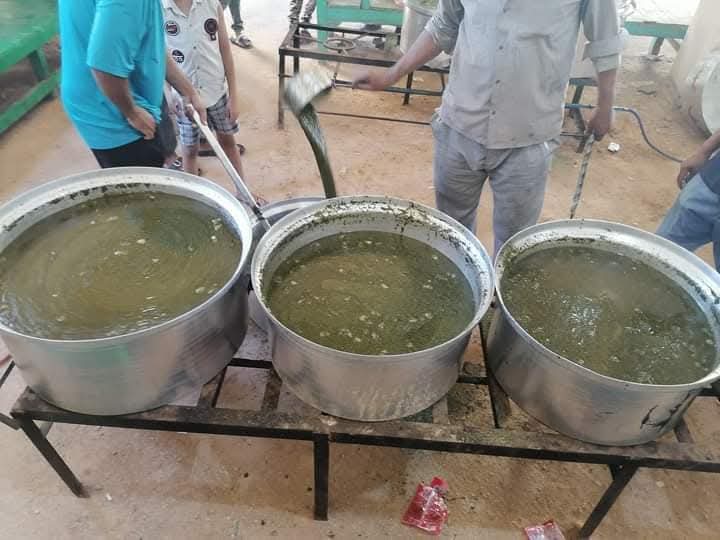
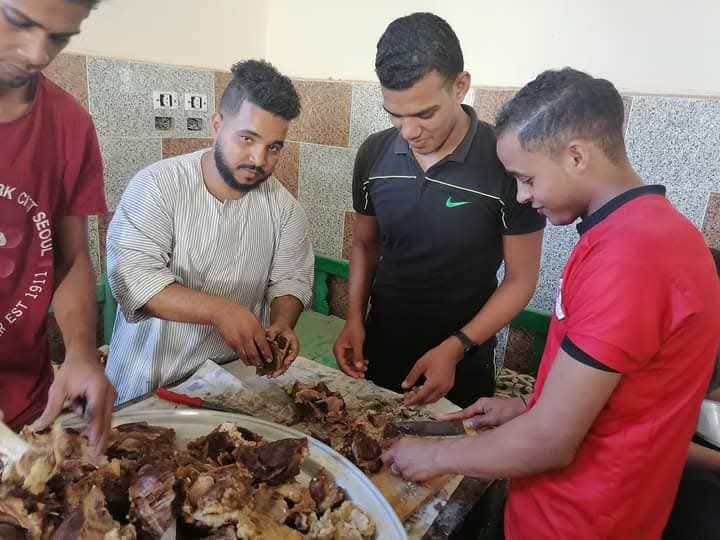
    Dried mouloukhiya ... Photo by Abu al-Hasan Abd al-Sattar
    Dried mouloukhiya … Photo by Abu al-Hasan Abd al-Sattar
    the preparations
    the preparations
    An impressive image

    At the end of the night, as the children disperse into the streets carrying their pots full of molokhia, the square remains a witness to an extraordinary scene, where simplicity intertwines with joy, and generosity with spirituality, as a small village on the banks of Luxor writes a distinctive page in the memory of the Prophet’s birthday.

    While all of Egypt’s villages witness various celebrations, the “molokhia feast” in Naga al-Aqarba remains a landmark, making molokhia more than just food. It is a sacred folk ritual that unites hearts in love for the Prophet.

    Share. Facebook Twitter Pinterest LinkedIn Tumblr Email
    Previous ArticleThe story of Safaga: phosphate mines and the sound of history passing through generations
    Next Article Qena celebrates the Prophet’s birthday… rituals passed down through generations for centuries
    Abo Elhasan Abd Elsattar

    Related Posts

    The Sanctuary of Saint Bishoy: A Living Ledger of Egyptian Monasticism

    2026-05-13

    Shadows Over the Nile: Concrete Construction Spark Criticism Beneath the Temple of Kalabsha

    2026-05-13

    The Last Cobblers of Luxor: A Craft Contesting the Modern Tide

    2026-05-10

    Comments are closed.

    Recent Posts
    • The Woven Skeleton: The Palm Frond Artisans of Kafr Al-Battikh Fend Off a Plastic Tide
    • The Sanctuary of Saint Bishoy: A Living Ledger of Egyptian Monasticism
    • Shadows Over the Nile: Concrete Construction Spark Criticism Beneath the Temple of Kalabsha
    • The Damanhur Opera House: A Sovereign Union of Italian Elegance and Islamic Heritage
    • The Silent Outposts of Port Said: Ruins Beyond the Reach of Visitors
    Recent Comments
    • Binance美国注册 on An exhibition in Paris reimagines Cleopatra, far from Western narratives
    • binance "oppna konto on An exhibition in Paris reimagines Cleopatra, far from Western narratives
    • código de referencia de Binance on Art exhibition documents the first Egyptian Scout postage stamp at the National Museum of Civilization
    • Binance账户创建 on Between popular religiosity and the benevolence of the Quran, how can beauty be reconnected with “Sayyida Zeinab”?
    • phoenix game on Theater never dies… Mansoura saves its heritage and restores it as an opera house
    About Us
    About Us

    Your source for the lifestyle news. This demo is crafted specifically to exhibit the use of the theme as a lifestyle site. Visit our main page for more demos.

    We're accepting new partnerships right now.

    Email Us: info@example.com
    Contact: +1-320-0123-451

    Facebook X (Twitter) Pinterest YouTube WhatsApp
    Our Picks

    The Woven Skeleton: The Palm Frond Artisans of Kafr Al-Battikh Fend Off a Plastic Tide

    2026-05-14

    The Sanctuary of Saint Bishoy: A Living Ledger of Egyptian Monasticism

    2026-05-13

    Shadows Over the Nile: Concrete Construction Spark Criticism Beneath the Temple of Kalabsha

    2026-05-13
    Most Popular

    Shadows Over the Nile: Concrete Construction Spark Criticism Beneath the Temple of Kalabsha

    2026-05-135 Views

    The Sanctuary of Saint Bishoy: A Living Ledger of Egyptian Monasticism

    2026-05-132 Views

    The Healing Arteries of Dakhla: Harnessing the Geothermal Riches of the New Valley

    2026-05-062 Views
    Demo
    Latest Posts

    The Woven Skeleton: The Palm Frond Artisans of Kafr Al-Battikh Fend Off a Plastic Tide

    2026-05-140 Views

    The Sanctuary of Saint Bishoy: A Living Ledger of Egyptian Monasticism

    2026-05-132 Views

    Shadows Over the Nile: Concrete Construction Spark Criticism Beneath the Temple of Kalabsha

    2026-05-135 Views

    The Damanhur Opera House: A Sovereign Union of Italian Elegance and Islamic Heritage

    2026-05-111 Views
    Stay In Touch
    • Facebook
    • Twitter
    • Pinterest
    • Instagram
    • YouTube
    • Vimeo
    Don't Miss

    Shadows Over the Nile: Concrete Construction Spark Criticism Beneath the Temple of Kalabsha

    By Bab Masr2026-05-13

    A controversy erupts in Aswan as new concrete structures at the Temple of Kalabsha spark…

    The Sanctuary of Saint Bishoy: A Living Ledger of Egyptian Monasticism

    2026-05-13

    The Healing Arteries of Dakhla: Harnessing the Geothermal Riches of the New Valley

    2026-05-06

    Subscribe to Updates

    Get the latest creative news from SmartMag about art & design.

    Demo
    Demo
    Latest Posts

    The Woven Skeleton: The Palm Frond Artisans of Kafr Al-Battikh Fend Off a Plastic Tide

    2026-05-140 Views

    The Sanctuary of Saint Bishoy: A Living Ledger of Egyptian Monasticism

    2026-05-132 Views

    Shadows Over the Nile: Concrete Construction Spark Criticism Beneath the Temple of Kalabsha

    2026-05-135 Views

    The Damanhur Opera House: A Sovereign Union of Italian Elegance and Islamic Heritage

    2026-05-111 Views
    Stay In Touch
    • Facebook
    • Twitter
    • Pinterest
    • Instagram
    • YouTube
    • Vimeo
    Don't Miss

    Shadows Over the Nile: Concrete Construction Spark Criticism Beneath the Temple of Kalabsha

    By Bab Masr2026-05-13

    A controversy erupts in Aswan as new concrete structures at the Temple of Kalabsha spark…

    The Sanctuary of Saint Bishoy: A Living Ledger of Egyptian Monasticism

    2026-05-13

    The Healing Arteries of Dakhla: Harnessing the Geothermal Riches of the New Valley

    2026-05-06

    Subscribe to Updates

    Get the latest creative news from SmartMag about art & design.

    Demo
    About Us
    About Us

    Your source for the lifestyle news. This demo is crafted specifically to exhibit the use of the theme as a lifestyle site. Visit our main page for more demos.

    We're accepting new partnerships right now.

    Email Us: info@example.com
    Contact: +1-320-0123-451

    Facebook X (Twitter) Pinterest YouTube WhatsApp
    Our Picks

    The Woven Skeleton: The Palm Frond Artisans of Kafr Al-Battikh Fend Off a Plastic Tide

    2026-05-14

    The Sanctuary of Saint Bishoy: A Living Ledger of Egyptian Monasticism

    2026-05-13

    Shadows Over the Nile: Concrete Construction Spark Criticism Beneath the Temple of Kalabsha

    2026-05-13
    Most Popular

    Shadows Over the Nile: Concrete Construction Spark Criticism Beneath the Temple of Kalabsha

    2026-05-135 Views

    The Sanctuary of Saint Bishoy: A Living Ledger of Egyptian Monasticism

    2026-05-132 Views

    The Healing Arteries of Dakhla: Harnessing the Geothermal Riches of the New Valley

    2026-05-062 Views
    © 2026 ThemeSphere. Designed by ThemeSphere.

    Type above and press Enter to search. Press Esc to cancel.